
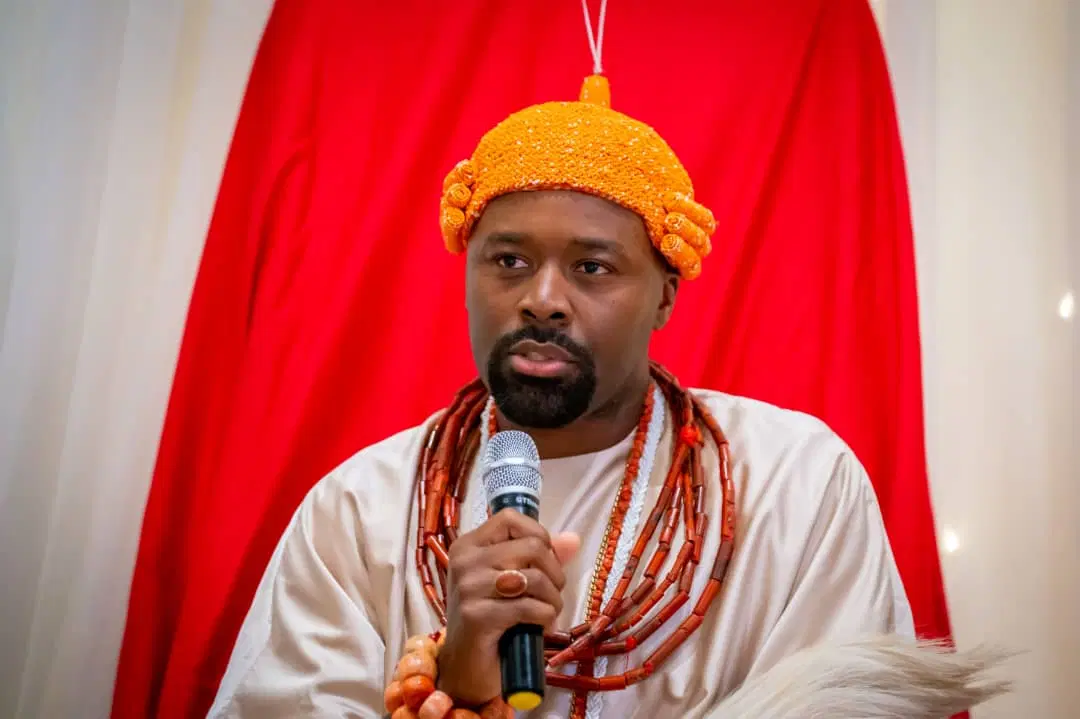
In the heart of Nigeria’s Niger Delta, where the Warri River meets the Atlantic’s restless churn, a young king sits upon a throne forged from centuries of royal bloodlines. Ogiame Atuwatse III, the 21st Olu of Warri and custodian of the Itsekiri people, ascended in 2021 at age 37 a Harvard-educated banker turned monarch, thrust into power amid the kingdom’s first succession crisis in decades. Four years on, as the world hurtles toward digital fragmentation and cultural erosion, Atuwatse III has emerged as a bridge between the ancient and the urgent, wielding tradition not as a relic but as a living force to fortify his people’s identity.
The Itsekiri, a seafaring ethnic group of about 1 million, have long navigated the treacherous waters of the Delta literally and figuratively. Their kingdom, centered in Warri, has been a nexus of trade since the 15th century, blending Yoruba, Edo, and Portuguese influences into a vibrant tapestry of language, festivals, and spiritual rites. Yet the 21st century poses existential threats: oil exploitation has scarred the land, ethnic rivalries simmer, urbanization lures youth away from roots, and globalization dilutes indigenous tongues. In this maelstrom, Atuwatse III’s reign represents a deliberate countercurrent, one that marries reverence for the past with pragmatic adaptation.
At the core of his efforts is a commitment to linguistic revival, a bulwark against the creeping dominance of English and Pidgin. In recent months, diaspora groups like Ugbajo Itsekiri UK have launched a formal curriculum for teaching the Itsekiri language in primary and junior secondary schools across communities. During a palace briefing in early 2025, Atuwatse III hailed the initiative as a “milestone in cultural preservation,” urging Itsekiri associations worldwide to rally behind it. He envisions the scheme not merely as education but as a tool to instill pride in the young, ensuring that the melodic rhythms of Itsekiri once whispered in fishing canoes and royal courts echo in boardrooms and bedrooms alike.
Festivals, too, have been reinvigorated under his watch, transforming from sporadic rituals into engines of unity and economic vitality. The annual Uge Oyo Ekoro coronation celebrations, marking his fourth anniversary in August 2025, drew thousands in a spectacle of regattas, dances, and boat races that hark back to the Itsekiri’s maritime legacy. These events, Atuwatse III insists, are platforms for cultural exchange and tourism, drawing visitors who leave with wallets lighter and appreciation deeper. “We preserve not in isolation, but in celebration,” he has said, echoing a philosophy that positions heritage as a shared global asset rather than a private heirloom.
Youth empowerment forms another pillar. On September 1, 2025, the Olu inaugurated the executives of Ugbarajo Itsekiri Youths (UIY), a body tasked with fostering leadership among the kingdom’s under-35s. Far from tokenism, the UIY embodies Atuwatse III’s vision of human capital development intertwined with cultural fidelity training young Itsekiri in skills from tech entrepreneurship to traditional governance, all while reinforcing values like communal solidarity and ancestral respect. Under his reign, the kingdom has seen interventions in education and conflict resolution, commending the UIY’s role in bridging generational divides.
Atuwatse III’s approach extends beyond borders, leveraging digital tools to reconnect the diaspora. Social media pulses with palace updates Instagram reels of cultural visitations, TikToks of youth speeches pulling scattered Itsekiri back to their core. He collaborates with international bodies and fellow monarchs, promoting cultural diplomacy that fosters peace in the volatile Delta. His 2024 receipt of the Leadership and Community Development Award at the African Achievers Awards in London singled out these endeavors, praising his promotion of “positive cultural values” amid modernity’s pull.
Critics might argue that such initiatives risk dilution festivals commodified for tourists, language classes competing with smartphone screens. Yet Atuwatse III, with his wife’s vocal advocacy for returning to core values, counters that adaptation is survival. In a kingdom once riven by disputes, his court remains a sanctuary of elders’ wisdom and ancient customs, a deliberate anchor in turbulent times.
As climate change laps at Delta shores and global forces reshape identities, Ogiame Atuwatse III’s efforts offer a model for indigenous resilience. He is not just preserving a culture; he is reimagining it vibrant, relevant, unbreakable. In the words of one palace chronicler, he illuminates the path so that Itsekiri heritage “shines anew.” For a people adrift in change, that light could not be more vital.