
Look at the landscape of democratic politics today, and you will notice a dangerous, recurring pattern. From Western Europe to Sub-Saharan Africa, citizens are losing faith in their institutions. The reason is simple: a growing, toxic disconnect between a ruling elite that is insulated from economic pain, and a populace that is forced to endure it.
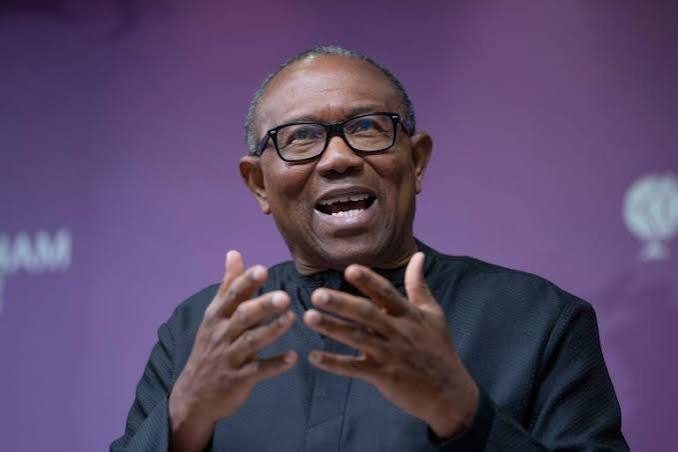
Nowhere is this dynamic more acute than in Nigeria. And few figures embody the counter-response to this crisis quite like Peter Obi.
As the former governor and third-party presidential disruptor marks his birthday, his reaction to the milestone tells us everything we need to know about his unique political philosophy. In a country where political status is traditionally verified by lavish state banquets and sprawling convoys, Obi issued a characteristic directive: cancel the celebrations, skip the expensive media advertisements, and redirect those resources to the country’s failing public hospitals and schools.
To understand why this matters, we have to look at the broader macro-economic picture. Nigeria is currently navigating a painful economic transition. The removal of fuel subsidies and the floating of the currency have triggered soaring inflation, placing unprecedented pressure on ordinary citizens. In this environment, the conspicuous consumption of the political class becomes more than just bad optics – it becomes a threat to democratic stability.
Obi’s genius has been to weaponize technocratic austerity. He is not a radical socialist; he is a wealthy businessman and former bank chairman. Yet, by choosing to fly commercial, carry his own luggage, and relentlessly focus on data, capital expenditure, and human development indices, he has managed to capture the imagination of an entire generation of young, tech-savvy Nigerians.
The “Obidient” movement he sparked is part of a global trend we are seeing across developing democracies: an aspirational middle class demanding that their government function less like a patronage network and more like a transparent corporation.
We cannot celebrate while our people face unprecedented hardship,” Obi noted, framing his personal choices as a matter of basic systemic accountability.
Of course, seasoned analysts of Nigerian politics point out the limitations of this approach. Managing a highly complex, multi-ethnic federal system with deep structural deficits requires massive, institutional overhauls. Critics argue that an obsession with penny-pinching and cutting costs can sometimes obscure the need for large-scale, strategic state investment. Personal frugality, they argue, is not an economic policy.
But that critique misses the profound cultural shift that Obi represents. In an era defined by populist rage and institutional decay, he offers a different path: populism driven not by identity politics or ethnic division, but by accountability and competence.
As Obi marks another year, the significance of his journey extends far beyond Nigeria’s borders. He is a test case for whether a developing nation can reform its political culture from within, proving that in the 21st century, the most potent disruption a leader can offer is simply a commitment to the rule of arithmetic.