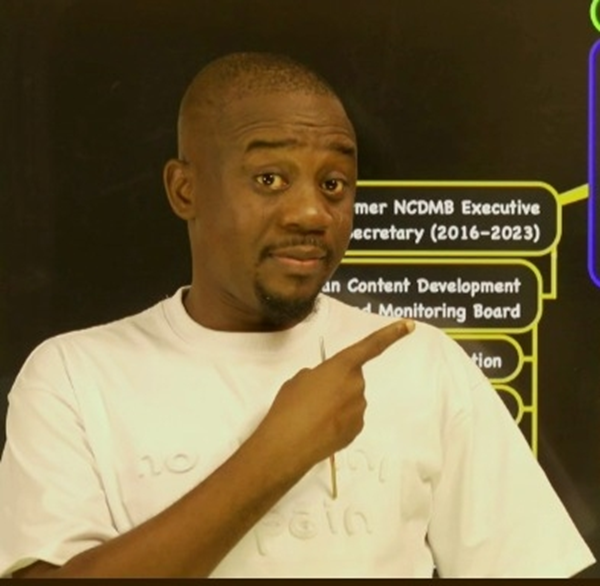
In the sprawling digital bazaar, where algorithms hum like distant generators and hashtags flicker like fireflies, one voice cuts through the static with quiet authority: he is DonAza.
His bio reads, “Come, let’s reason together“, on his YouTube channel that serves as his lectern. The Nigerian educator has transformed social media into a virtual classroom without walls, as his handle, @DonAzag, boasts over 25,000 followers, not the explosive virality of a pop star, but the steady congregation of seekers drawn to substance over spectacle.
In an era when Africa’s youth scroll for survival skills amid economic headwinds, DonAza’s posts are not mere broadcasts; they are bridges, ferrying knowledge from the flickering screens of Lagos to the global diaspora.
DonAza’s mission is unapologetically pan-African and rooted in the conviction that enlightenment knows no borders. His content is a mosaic of philosophy, history, and practical wisdom, targeting Nigerians first, as he unpacks the complexities of their homeland with the precision of a surgeon.
Threads on colonial legacies examine how Britain’s “civilizing” influence reshaped Igbo traditions, prompting followers to reclaim faulty narratives. “Reasoning together,” he insists, is the antidote to inherited amnesia, a call echoed in the yellow texts and steady voice in his videos.
For young Nigerians navigating unemployment rates hovering near 40%, DonAza pivots to empowerment: tutorials on digital entrepreneurship, breakdowns of blockchain for borderless trade, and meditations on stoicism to steel the spirit against power outages and policy U-turns.
One recent thread, viewed thousands of times, maps out “10 Habits of Resilient Africans,” blending Ubuntu philosophy with modern hustle, reminding viewers that resilience isn’t innate, it’s learned, one tweet at a time.
Yet DonAza’s gaze extends beyond Nigeria’s shores, embracing the continent’s 1.4 billion souls in a tapestry of shared struggles and triumphs. Africa’s education crisis, where 100 million children remain out of school, per UNESCO estimates, looms large in his feed.
He amplifies voices from the Sahel to the Cape, retweeting Kenyan innovators who are hacking solar technology for rural classrooms and South African activists who are decoding the roots of xenophobia.
His cross-border series, “Africa’s Forgotten Thinkers,” resurrects luminaries like Cheikh Anta Diop, whose Afrocentric scholarship challenges Eurocentric curricula still taught in too many African universities.
For the diaspora, the 17 million Nigerians abroad who wire home $25 billion annually, DonAza’s posts are homing beacons. He fosters virtual town halls on “Brain Gain Over Drain,” inviting expats to mentor via Zoom, transforming remittances into repositories of know-how. In one poignant exchange, a London-based engineer credits DonAza’s thread on sustainable agriculture for inspiring her to fund a hydroponics project in Ogun State, closing the loop between exile and origin.
Globally, DonAza positions Africa not as a charity case but as a crucible of ideas, challenging the West’s paternalistic lens. His English-language videos, laced with pidgin flair, draw Western viewers into dialogues on decolonizing minds, as he asks pertinent questions like: Why do TED Talks lionize Silicon Valley, while ignoring Nairobi’s iHub?
By threading global events through an African prism, from climate summits to AI ethics, he educates outward, fostering empathy in a polarized world.
In a continent where the projected number of social media users is expected to reach almost 600 million by 2025, DonAza’s approach is a quiet revolution, free from the usual ploys by influencers, while remaining persistent in his approach.
As Nigeria’s youth, 70% of whom are under 30, hunger for tools to outpace inherited inequities, DonAza stands as a digital griot, whispering that knowledge is the ultimate currency. In reasoning together, he doesn’t just teach; he ignites. And in that flame, a more enlightened Africa and world begin to glow.