
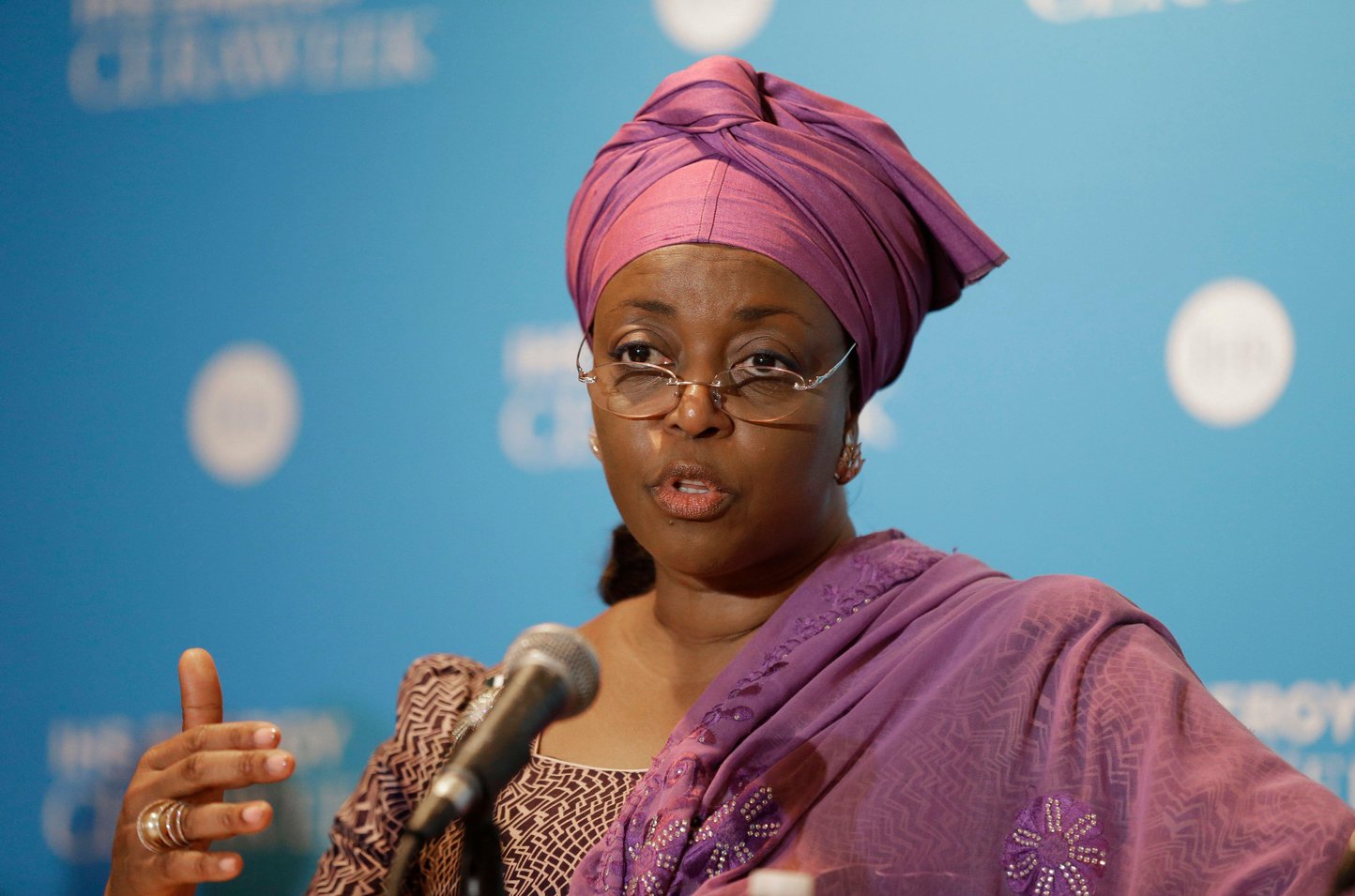
On a grey June afternoon in London, the jury at Southwark Crown Court delivered a verdict that reverberated far beyond Britain, cutting straight through the complex geometry of West African power.
After more than eleven years of multi-jurisdictional probes, frozen assets, and spectacular media condemnation, Diezani Alison-Madueke the former Nigerian petroleum minister and the first female president of OPEC was found not guilty on all six bribery charges brought against her in the United Kingdom.
For some, the acquittal was a stunning disbelief. For others, it was total vindication. But for Africa’s largest democracy, the verdict reopens an enduring, deeply uncomfortable paradox: When does aggressive accountability end, and when does political theater begin?
The case was never merely about the fate of one woman. It served as a grand, systemic mirror, reflecting a profound structural disconnect between two legal cultures – one built on strict institutional restraint, and another often driven by the immediate catharsis of public spectacle.
THE ARCHITECTURE OF POWER
Long before she became an international symbol of Nigeria’s complex relationship with oil, Alison-Madueke was a corporate heavyweight moving with quiet efficiency through the upper echelons of the energy sector. An architect by training and a former executive at Shell, she entered government under President Goodluck Jonathan, managing the transportation, mines, and steel portfolios before taking the helm of the country’s ultimate economic engine: the Ministry of Petroleum Resources.
In 2010, she became the first woman to hold the position. By 2014, she was leading OPEC, placing a Nigerian woman at the center of global energy diplomacy for the first time.
To her supporters, Alison-Madueke was a glass-ceiling-shattering reformer who elevated women and sought to restructure a notoriously opaque sector. To her critics, she oversaw a bureaucracy that sat at the heart of state patronage—a system where every policy shift, contract award, or regulatory reform created an immediate zero-sum game of winners and losers, allies and adversaries. By the time the Jonathan administration exited in 2015, she had become the ultimate political lightning rod.
TRIAL BY MEDIA VS. THE BURDEN OF PROOF
With the arrival of a new administration in Abuja in 2015, the political winds shifted. Nigeria’s anti-corruption agencies launched wide-ranging, highly publicized investigations. Properties, bank accounts, and luxury assets from Lagos to London became subjects of forfeiture proceedings, while American and British investigators opened their own files.
In the public square, the nuance of the law was promptly discarded.
THE ANATOMY OF MODERN ANTI—CORRUPTION
In high-profile crusades, headlines move exponentially faster than due process. Interim asset forfeitures procedural tools meant to preserve property during an active investigation were widely presented to the public as definitive proofs of guilt. Public opinion settled long before a jury or judge had ever been selected.
Alison-Madueke consistently maintained her innocence, arguing she had been transformed into a convenient archetype – the face of a nation’s systemic corruption, allowing prosecutors to convict her in the press long before presenting a single piece of evidence in a court of law.
When the British case finally made it to trial after a decade of preparation, the prosecution’s narrative suffered a quiet but critical structural vulnerability. Prosecutors did not actually allege that contracts had been improperly awarded to unqualified entities due to bribery. Instead, they relied heavily on circumstantial lifestyle evidence, arguing that luxury accommodations, travel, and shopping constituted “improper” benefits.
Inside a British courtroom, public anger and political significance mean nothing. The evidence must survive intense judicial scrutiny. After lengthy deliberations, the London jury rejected the narrative. The verdict was unanimous: not guilty on all counts.
A TALE OF TWO LEGAL SYSTEMS
The acquittal exposes the deep institutional friction between the judicial landscapes of the United Kingdom and Nigeria. While Nigeria’s legal system inherited the core tenets of British common law including the presumption of innocence and strict evidentiary standards, the application remains worlds apart.
Systemic Attribute:
The United Kingdom (Southwark Crown Court)
The Nigerian Public Square
The Evidentiary Threshold:
Uk: Requires proof beyond a reasonable doubt; lifestyle optics must directly connect to a statutory abuse of power.
Nigeria: High reliance on political optics, weaponized media leaks, and pre-trial public condemnation.
The Primary Forum:
Uk:Strict, isolated cross-examination within the quiet confines of a courtroom.
Nigeria:Rapidly litigated across front pages, talk shows, and political campaigns.
THE DECISION MAKERS
Uk: 12 ordinary citizens entirely insulated from domestic political pressure.
Nigeria: A highly polarized public shaped by decades of institutional frustration.
In London, suspicion was not enough. Outrage was not enough. Evidence had to survive cross-examination, and in Alison-Madueke’s case, the state’s narrative simply failed to hold water.
THE RULE OF LAW VS. POLITICAL CATHARSIS
The ultimate legacy of this 11-year saga offers a profound, cautionary insight for global governance: allegations are not convictions, investigations are not verdicts, and outrage is not a substitute for justice.
Aggressive anti-corruption campaigns are fundamentally necessary in societies working to rebuild public trust after decades of institutional mismanagement. But the true institutional strength of a democracy is measured not by how many high-profile targets it accuses, but by its disciplined adherence to the rule of law under intense pressure.
When a state relies on public optics rather than ironclad evidence, justice quickly degenerates into political persecution. Conversely, a failure to ensure transparent accountability risks institutionalizing impunity. For modern developing states, the path forward requires moving away from the performance of accountability and investing deeply in the quiet, unglamorous work of building independent institutional frameworks.
History will continue to debate the political and economic legacy of Diezani Alison-Madueke’s tenure. The courts, however, have delivered their judgment on this chapter. As Africa’s democracies continue to mature, the case stands as a landmark reminder that in the necessary pursuit of corruption, nations cannot afford to destroy the very legal principles that make justice possible in the first place.