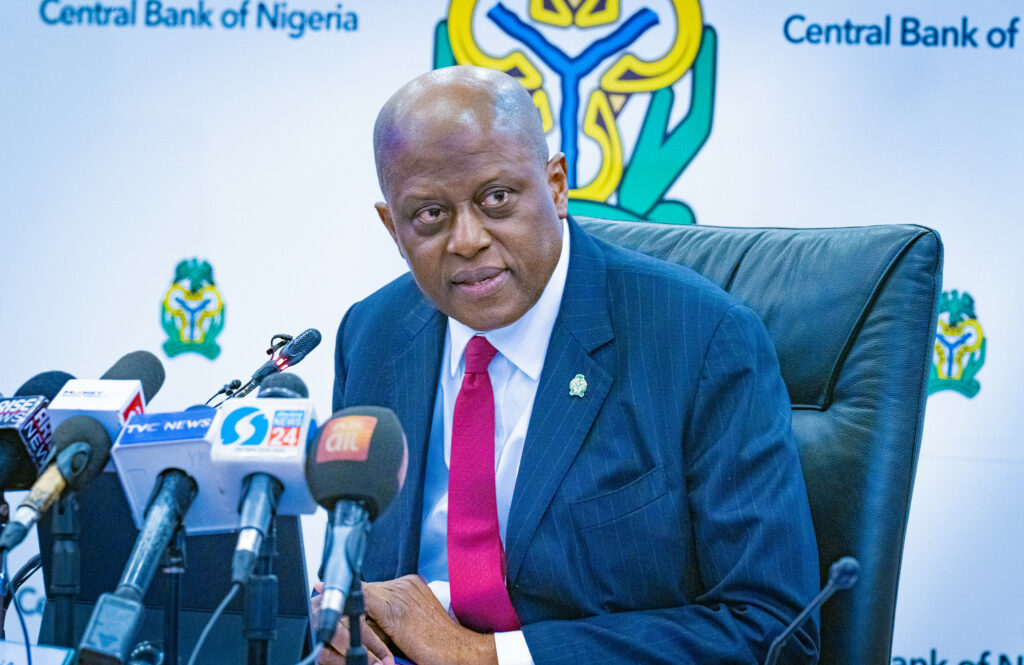
In the two years since Olayemi Cardoso took the helm at Nigeria’s Central Bank, the former Citibank chairman has navigated a landscape scarred by distortions and global shocks. Appointed in September 2023 by President Bola Tinubu, the central bank was plagued by quasi-fiscal interventions, multiple exchange rates and depleted reserves.
His response: a decisive pivot to orthodox monetary policy, aimed at restoring credibility and attracting foreign capital to Africa’s largest economy.
The results, while mixed, suggest progress. Inflation, which peaked above 34 per cent in mid-2024, has moderated to around 23 per cent by mid-2025, according to International Monetary Fund projections. GDP growth is forecast at 3.9 per cent this year, accelerating to 4.1 per cent in 2026, buoyed by non-oil sectors and improved fiscal co-ordination. External reserves have swelled to over $40bn, covering more than 12 months of imports, while the naira has stabilised in a more transparent foreign exchange market following the clearance of a $7bn backlog. These gains earned Cardoso the Central Bank Governor of the Year accolade at the 2025 African Banker Awards, lauded for “bold and strategic” reforms that revived investor confidence.
Yet Cardoso’s tenure is no unalloyed triumph. Aggressive interest rate hikes the monetary policy rate now stands at 27.25 per cent after successive increases have squeezed businesses and households already reeling from fuel subsidy removal and naira devaluation. Food inflation remains stubbornly high at over 30 per cent, exacerbating poverty in a nation where more than 40 per cent live below the line. Critics, including some in the business community, argue that the CBN’s focus on demand-side tightening overlooks supply bottlenecks in agriculture and infrastructure. As Cardoso himself acknowledged in a recent IMF podcast, regaining stability requires “painful but necessary” adjustments to rebuild trust eroded by years of unorthodox policies.
Cardoso’s blueprint draws from his three decades in banking, including a stint as Lagos state’s economic planning commissioner, where he helped lay foundations for the megacity’s fiscal discipline. At the CBN, he has prioritised transparency: unifying exchange windows, introducing electronic FX matching and recapitalising banks to withstand shocks.
The September 2025 Monetary Policy Committee meeting, his latest, reaffirmed this stance, holding rates steady while signalling vigilance against upside risks from floods and energy costs. Capital inflows have responded, with portfolio investments rising and diaspora remittances targeted at $1bn monthly.
Domestically, the reforms have sparked debate. In his November 2024 address to the Chartered Institute of Bankers, Cardoso outlined strides in curbing inflation and fostering growth, but conceded that “challenges persist”. Opposition/critics voices point to regional imbalances, with allegations of bias in staff appointments.
More broadly, Nigeria’s reliance on oil production hovers at 1.4m barrels per day, below potential underscores the limits of monetary policy alone. As IMF Africa director Abebe Aemro Selassie noted alongside Cardoso, sustainable growth demands structural reforms in diversification and governance.
Looking ahead, Cardoso’s optimism for 2025 centres on exchange rate stability and sectoral expansion. With global headwinds easing falling commodity prices and potential US rate cuts Nigeria could attract more FDI, particularly in energy. But risks abound: geopolitical tensions, climate disruptions and fiscal slippage could unravel gains. The CBN’s commitment to inflation-targeting and data-driven decisions will be tested.
In sum, Cardoso has injected professionalism into an institution long criticised for opacity. His reforms, while inflicting short-term pain, position Nigeria for resilience. Yet true success hinges on broader policy coherence. As Africa’s economic powerhouse grapples with its potential, the world watches whether Cardoso’s steady hand can deliver enduring prosperity.