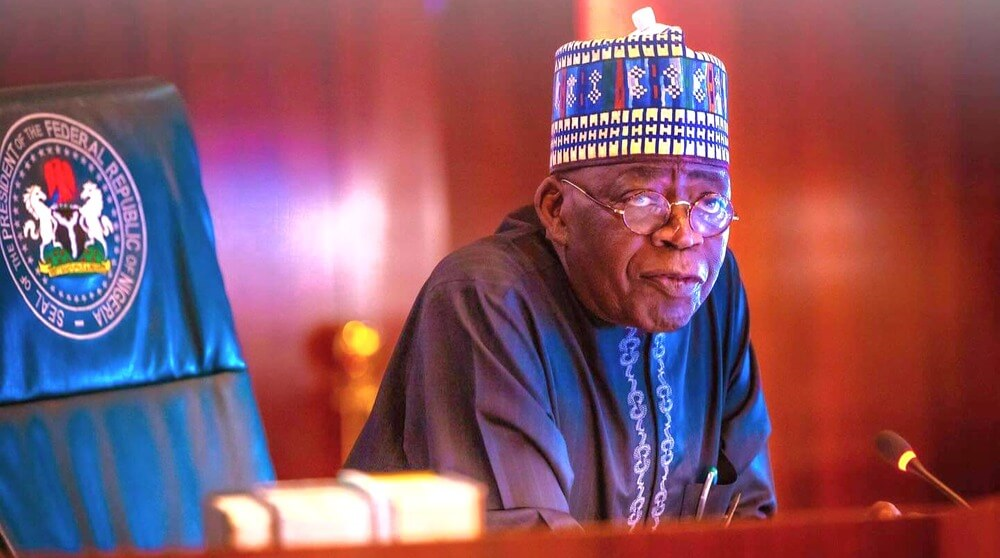
Questions surrounding Nigerian President Bola Tinubu’s past gained fresh momentum in June 2025 when he described the Belarusian businessman Alexander Zingman as his schoolmate at Chicago State University (CSU). The remark, made during the Renewed Hope Mechanization Programme launch in Abuja, has reignited debates over Tinubu’s identity and academic credentials.
With Zingman present, Tinubu called him a “very good friend” and “neighbour” from their alleged shared time at CSU. “I believe our university would be proud of what we’re doing here today,” he said. The statement, linking the Nigerian leader to a controversial figure arrested in Congo in 2024 for alleged arms dealing, has fueled scrutiny of both men’s opaque histories.
In Nigeria, where Tinubu’s identity has sparked decades of controversy, court battles, and political intrigue, the claim landed explosively. It revived persistent questions: Who is Bola Ahmed Tinubu? Where was he born? What schools did he attend? And why do gaps in his early life persist as he holds Africa’s most powerful office?
A Decades-Long Identity Dispute
Tinubu’s identity controversy traces back to the 1990s. As a senator and later Lagos State governor, he faced accusations of falsifying his educational background. A 1999 affidavit to Nigeria’s Independent National Electoral Commission (INEC) claimed he attended St. Paul’s School, Aroloya, and Government College, Ibadan. By 2003, these claims vanished from filings. Tinubu attributed the omission to lost records from his exile during Nigeria’s military era, but the explanation raised more doubts.
The late Yinka Odumakin, a prominent activist, amplified these concerns in his widely read piece, “The Many Lies of Bola Tinubu.” Odumakin highlighted inconsistencies in Tinubu’s reported birth year (shifting from 1952 to 1949), parentage, and lack of verifiable childhood ties. “No former classmate, no childhood friend, no known photograph of a young Tinubu exists,” he wrote. “Only a grown man emerged in Nigeria’s political history.”
Chicago State University: Confirmed Degree, Lingering Doubts
Tinubu’s attendance at CSU is one verifiable fact. The university confirmed he graduated in 1979 with an accounting degree. Yet, discrepancies in his pre-CSU identity persist. In 2022, journalist David Hundeyin’s investigative report went viral, alleging possible identity theft involving mismatched U.S. records, irregular tax filings, and a vague employment history. Court-released CSU documents listed Tinubu as “Bola A. Tinubu,” but one record inexplicably marked him as female – a clerical error, CSU claimed. Critics remained skeptical.
The Zingman Connection: Fact-checking the Claim
Alexander Zingman, a Belarusian-American businessman linked to Russian arms deals and African regimes, was never tied to Tinubu’s story until now. Tinubu’s claim that they attended CSU together lacks supporting evidence. Zingman has stated he studied at the University of Illinois at Chicago (UIC), a separate institution. Records show Tinubu attended CSU from 1975 to 1979, when Zingman, born around 1966, would have been 11–13 years old and likely still in the Soviet Union. No documentation places Zingman in the U.S. during that period.
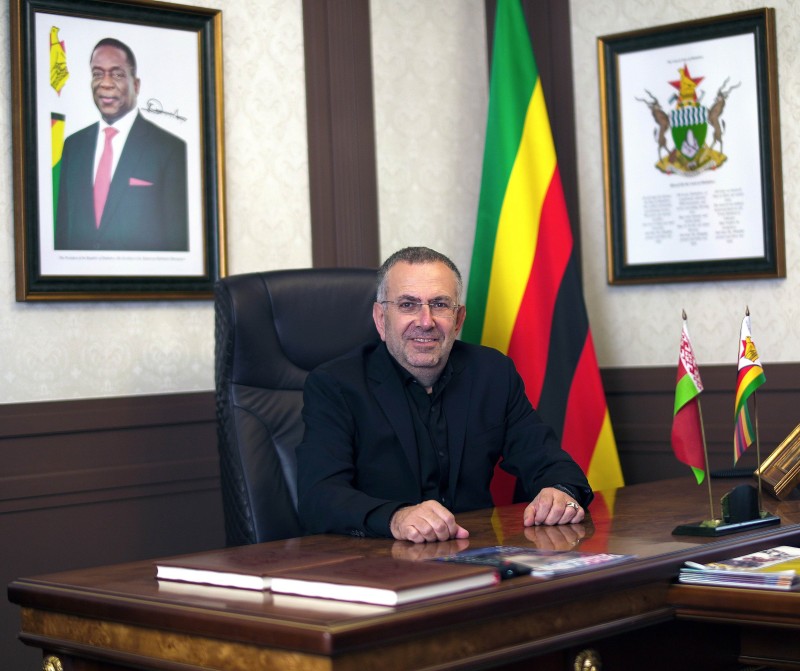
Belarusian businessman Alexander Zingman
The discrepancy has sparked questions about Tinubu’s intent. Was the remark a misrecollection or a deliberate misdirection? Zingman’s own murky biography scarce educational details and controversial business ventures only deepens the intrigue.
Silence from the Presidency
Tinubu’s administration has largely sidestepped the controversy. During the 2023 presidential campaign, his team dismissed similar allegations as political attacks. The presidency’s silence now frustrates those seeking clarity. “It’s not just about certificates,” said lawyer Abdul Mahmud. “It’s about whether a leader can govern with an unverifiable past and whether Nigerians deserve transparency.”
Opposition leaders are pressing for answers, arguing that the claim undermines public trust.
A Legacy Under Scrutiny
Tinubu, a political survivor of coups, exile, and electoral battles, has long deflected questions about his origins. The Zingman claim, though seemingly minor, has reopened a broader debate: How much truth do Nigerians deserve from their leaders?
Until Tinubu provides verifiable details not just documents, but a coherent narrative the fog around his identity will persist, casting a shadow over his presidency.