
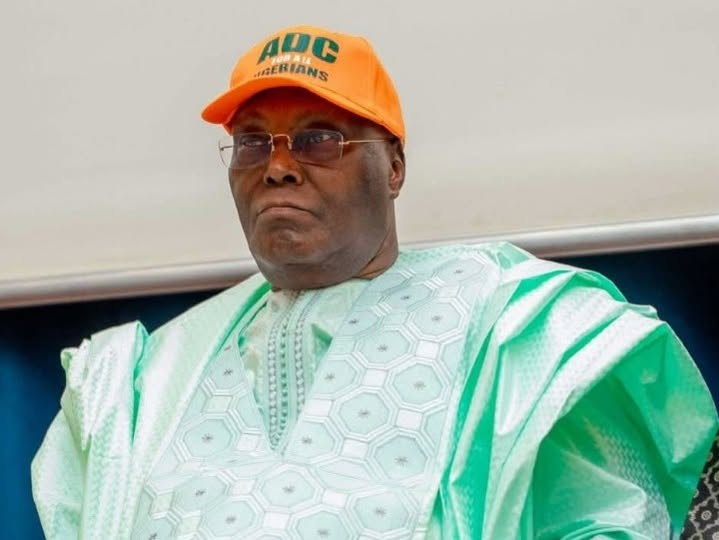
For over two decades, the name Atiku Abubakar has been a constant on Nigeria’s ballot papers. Like a recurring season of a TV show that has long overstayed its welcome, the former Vice President’s pursuit of the presidency has become a political fixture. But in 2026, as the dust settles on his recent move to the African Democratic Congress (ADC) and the echoes of the 2023 defeat still linger, his ambition is no longer just a personal quest – it is a weight around the neck of the Nigerian opposition.
The math of 2023 was simple, yet the result was a self-inflicted disaster. Combined, the opposition garnered more votes than the incumbent. Divided, they handed over the keys to the Aso Rock. As we look toward 2027, the script remains unchanged, and that is precisely the problem.
THE “VETO“ OF THE VETERAN
Atiku’s primary contribution to the current political landscape is not leadership, but a logjam. His insistence on being the “alpha“ candidate creates a “veto“ effect within the opposition. By refusing to play the role of a kingmaker or a mentor, he forces younger, more “popular” candidates into a corner: either they submit to a tired brand or they splinter into third parties.
This fragmentation is a gift to the ruling APC. When Atiku remains in the race, the conversation inevitably shifts from “how do we fix Nigeria?“ to “how do we manage Atiku’s ego?“ The result is a weak, reactionary opposition that spends more time negotiating internal peace treaties than challenging government policy.
THE DEOMGRAPHHIC DISCONNECT
Nigeria is a country with a median age of 18. In 2027, Atiku will be 80. While age alone is not a disqualifier, the political baggage is. For a generation of voters seeking a clean break from the “old guard,“ Atiku represents the very establishment they wish to disrupt.
His recent admission that 2027 “may be his final attempt” is less of a promise and more of a threat to the momentum of the opposition. It signals a willingness to exhaust the opposition’s resources and patience for one last roll of the dice, regardless of the strategic cost.
WHY HE MUST STEP ASIDE
To defeat an entrenched political machine like the one currently in power, the opposition needs more than a name; it needs a unified front. Here is why Atiku must pass the torch:
- Unity is Impossible with Atiku: His presence is a lightning rod for friction. From the “G5“ governors to the “Obidient“ movement, his candidacy has historically acted as a centrifugal force, pushing allies away rather than pulling them in.
- The Power of the Kingmaker: History remembers those who built empires more kindly than those who died trying to rule them alone. By stepping aside, Atiku could transform his vast network and resources into a foundational support system for a candidate who captures the current zeitgeist—someone like a Peter Obi or a fresh technocratic face.
- The APC Playbook: The ruling party’s strategy relies on a divided opposition. As long as Atiku is on the field, the APC can recycle the same old attacks, relying on the public’s “Atiku fatigue“ to win. A new, popular candidate renders that playbook obsolete.
THE BOTTOM LINE
Atiku Abubakar has served his country, but his greatest final service would be his absence from the ballot. True statesmanship is knowing when the stage no longer belongs to you.
If the goal is truly to “rescue“ Nigeria – a phrase the former VP uses often – then he must realize that he cannot be the rescuer. The opposition cannot move forward while looking backward. It is time for the veteran to step into the shadows so that a new light can finally emerge.