
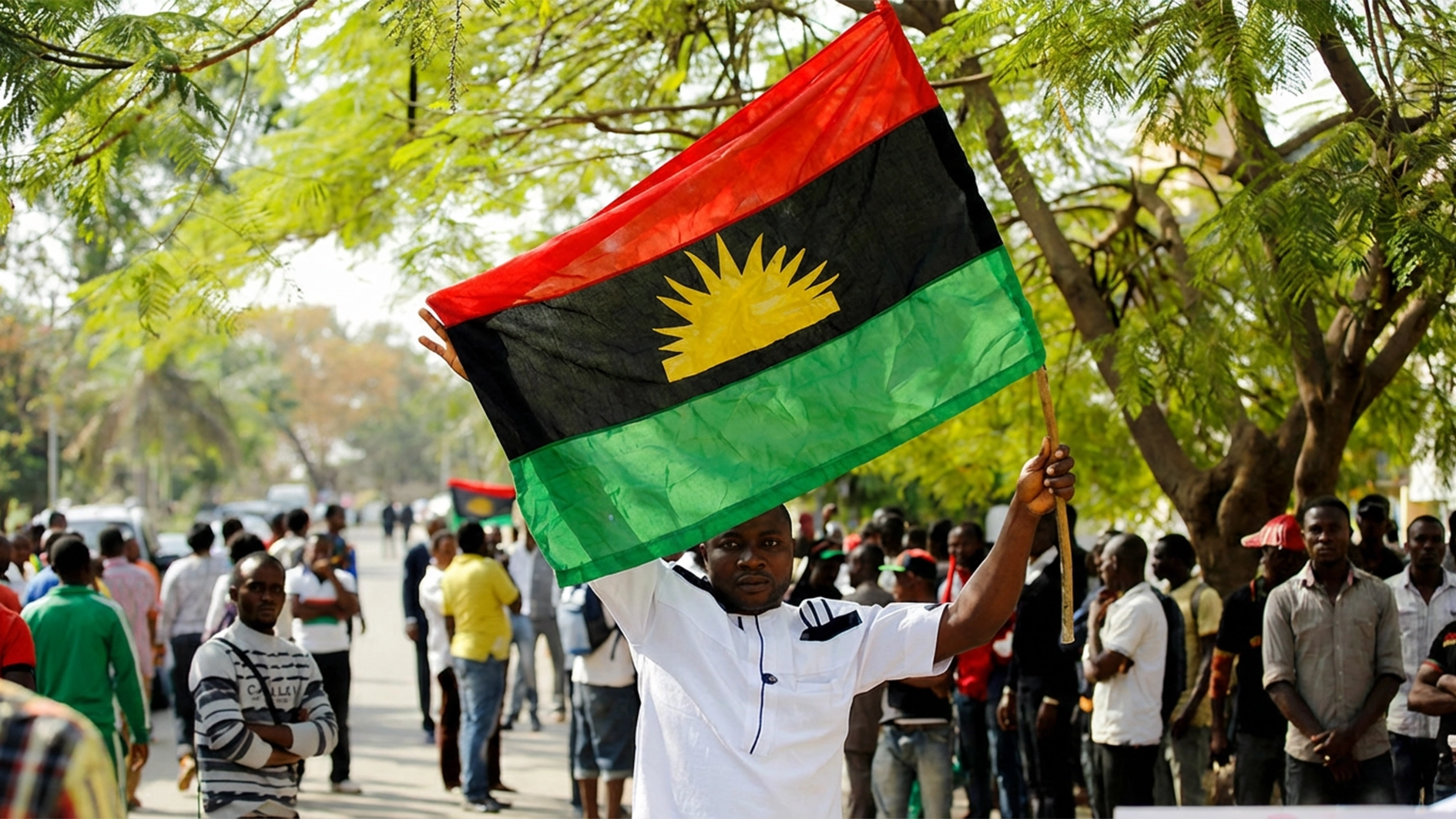
Every year on May 30, a quiet, uncomfortable shadow falls over West Africa. It marks the anniversary of the 1967 declaration of the Republic of Biafra a short-lived breakaway state that triggered a brutal 30-month civil war in Nigeria. To the modern observer, this might look like just another tragic, mid-century ethnic conflict in the post-colonial world. But if you zoom out and look at the structural forces at play, Biafra represents something far more significant: it is the great institutional “what if” of modern African history.
To understand Biafra, we have to look at the flawed architecture of the post-colonial state. When the British Empire hastily exited Nigeria in 1960, it did what it so often did across the globe from the Middle East to South Asia. It drew arbitrary lines on a map, stitching together distinct nations with vastly different cultures, religions, and governance traditions into a single state. In Nigeria’s case, it forced a union between the feudal, Muslim North; the culturally complex Yoruba West; and the highly educated, fiercely egalitarian Igbo East.

When this unstable political settlement collapsed into military coups and the horrific anti-Igbo pogroms of 1966, the Eastern Region seceded under the leadership of Chukwuemeka Odumegwu Ojukwu. They chose as their symbol a rising sun. And for a brief moment, it looked like the dawn of a completely different kind of African nation.
The Innovation of Necessity
What makes the Biafran experiment so fascinating to political scientists and economists is how it responded to state failure and total isolation. Backed by Great Britain and the Soviet Union, the Nigerian federal government imposed a total land, sea, and air blockade on the enclave. By all conventional metrics, Biafra should have imploded within weeks.
Instead, it unleashed an extraordinary wave of indigenous state-building and technological innovation. Left with zero access to global markets or foreign aid, the Biafrans did something remarkable – they innovated under duress:
Modular Industrialization: Lacking access to imported fuel, Biafran engineers invented localized, modular petroleum refining units, effectively creating a decentralized energy grid from scratch.
Logistical Ingenuity: When their major airports were captured, they converted a standard public road into the “Uli Airstrip.“
Operating entirely in pitch darkness without radar to evade airstrikes, it became one of the busiest cargo hubs on the continent, keeping a humanitarian lifeline open.
The Brain Trust: A collective of local academics, known as the Research and Production Unit (RAP), manufactured everything from domestic radio transmitters to tactical weaponry.
This wasn’t just survival; it was a glimpse of a self-reliant, highly industrialized African superpower. It proved that African development didn’t have to depend on Western aid or Chinese loans; it could be driven by internal human capital and meritocracy.
The Geopolitics of Starvation
But human capital cannot overcome a total caloric deficit. The tragedy of Biafra is that its ultimate defeat was not engineered on the battlefield, but through a calculated strategy of state-enforced starvation.
The Nigerian government openly weaponized hunger, leading to one of the worst humanitarian catastrophes of the 20th century. Between one and three million people died, the vast majority of them children starving in silence.
The international community’s response was a masterclass in geopolitical cynicism. The Organization of African Unity and the United Nations stood by, operating under a rigid defense of Westphalian sovereignty. They decided that maintaining the sanctity of artificial colonial borders was far more important than preventing a genocide. When Biafra surrendered in January 1970, the experiment was effectively erased from the map.
The Cost of Institutional Amnesia
In the decades since, Nigeria has attempted to practice a policy of forced amnesia. The civil war is largely omitted from school curricula, and discussing Biafra remains a strict political taboo in Abuja. But as I often say on this show, you cannot solve a structural crisis by pretending it doesn’t exist.
Because Nigeria never addressed the foundational flaws of its forced union, nor the systemic marginalization of the East that followed the war, the ghost of Biafra has returned. Today, we see a rising tide of neo-Biafran agitation among a younger generation that never even lived through the war. It is a predictable reaction to a state that still feels deeply dysfunctional, corrupt, and highly centralized.

Chukwuemeka Odumegwu Ojukwu
The Broader Lesson
There is a broader lesson here for the world. Biafra matters because it represents the deferred hope of the entire African continent. It was a brief, flashing proof-of-concept that an African state could look the global powers in the eye, innovate its way out of poverty, and build a society based on competence rather than ethnic cronyism.
When Biafra died, that specific model of African governance died with it, replaced by the fragile, resource-dependent, and fractured state structures that we see across much of the post-colonial world today. Fifty-nine years after that fateful declaration of independence, the Biafran paradox endures: it reminds us that until a state is built on the genuine consent of its people and absolute structural justice, true stability will always remain out of reach.