
When Alexis de Tocqueville observed early democratic systems in the 19th century, he argued that self-governance relies less on written laws than on “habits of the heart” – the quiet, foundational trust citizens invest in their public institutions. Modern technological evangelists promised that digital systems would strengthen those habits by replacing fragile human oversight with automated, code-driven transparency.
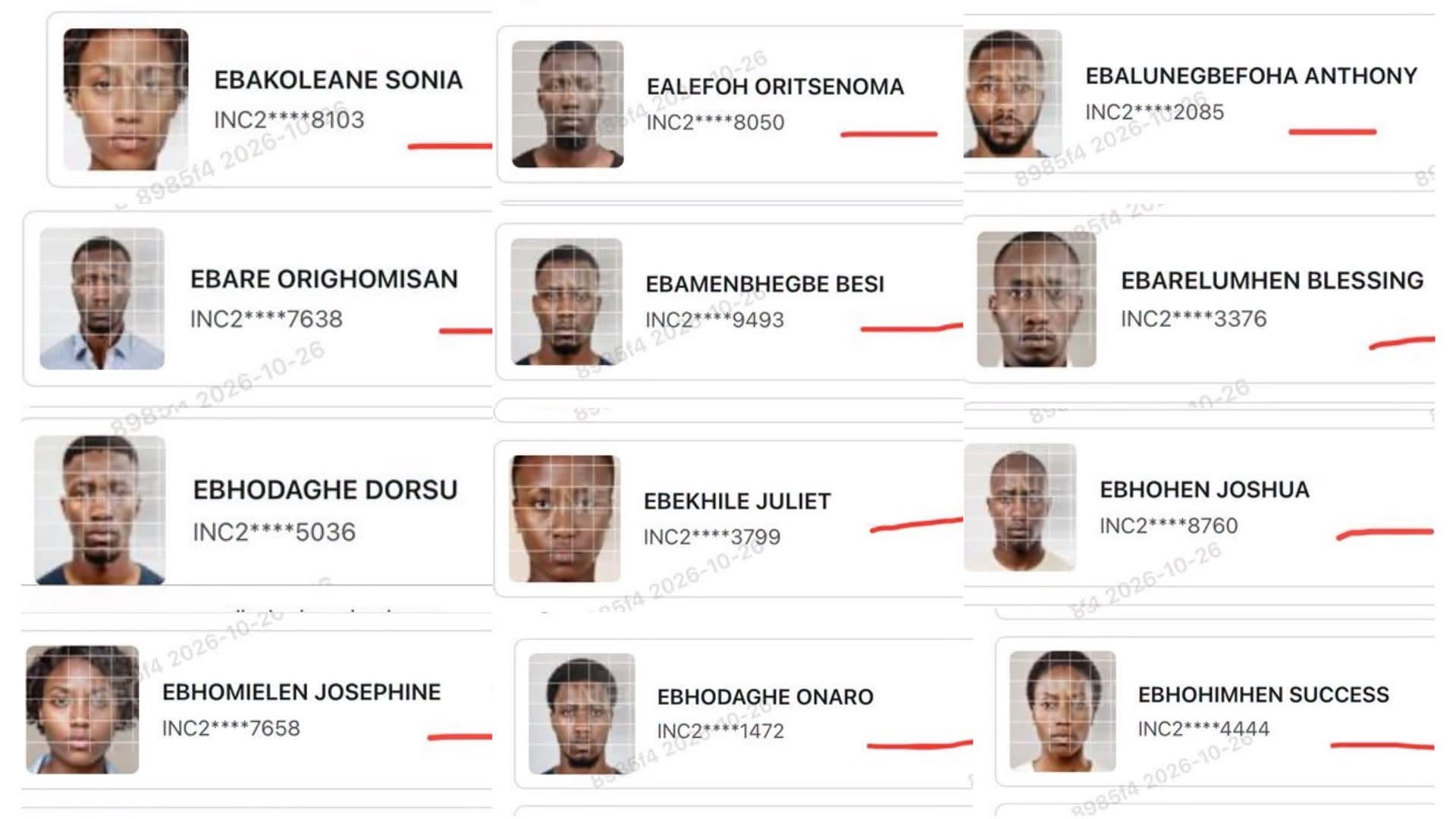
Yet across developing democracies, that premise is undergoing a severe test. In Nigeria, where the Independent National Electoral Commission (INEC) opened its draft voter database to public online scrutiny ahead of the 2027 general elections, digital transparency exposed a 21st-century anomaly: synthetic, AI-generated facial portraits attached to voter records.
A High-Stakes Political Crisis
Alongside real voter data, eagle-eyed citizens, civic tech groups, and opposition leaders flagged synthetic portraits, duplicate National Identification Numbers (NINs), and names of long-deceased citizens.
Former Kano State Governor Rabiu Musa Kwankwaso called for an immediate independent audit of the preliminary roll, warning that compromised records threaten the fundamental credibility of the upcoming elections. Civic watchdogs echoed those concerns, noting that synthetic profiles on local rolls establish a digital mechanism for phantom voting and inflated ballot totals at polling units on election day.
“Nobody should be allowed to exploit technology, including artificial intelligence, to undermine our electoral system,” Kwankwaso warned, capturing a widespread public anxiety. “The credibility of the 2027 elections begins with a credible voter register.”
Technical Glitch or Systemic Failure?
Facing sharp political backlash, INEC pushed back against assertions of deliberate rigging, framing the scandal as an operational issue within an uncertified database.
Commission spokesperson Mohammed Kudu Haruna clarified that the published records represent an uncertified preliminary draft—published specifically so that the public can inspect, flag, and challenge irregularities. INEC confirmed an internal review to determine whether the synthetic images stemmed from operator errors, vendor misconduct, or technical vulnerabilities in its field data-capture software.
For INEC, the weeks leading to its statutory December 15 certification deadline represent a critical administrative test. Rebuilding public faith requires more than press statements. True electoral integrity requires independent technical audits, clear vendor accountability, and transparent data cleanup processes that demonstrate to citizens that every face in the register corresponds to a real, verifiable voter.
Electoral Phase:
Preliminary Display:
Objective & Technical Focus – Public review and flagging of errors, duplicate NINs, and ghost entries.
Focus Statutory Target – completed.
Electoral Phase: Internal Investigation
Objective & Technical Focus – Forensic audit of data-capture hardware and vendor software lapses.
Target – ongoing
Electoral Phase: Public Adjudication.
Objective & Technical Focus – Reviewing formal claims and objections submitted by registered voters.
Statutory Target – November 2026
Electoral Phase: Final Certification
Objective & Technical Focus – Statutory purging of non-viable records and issuance of the certified register.
Statutory Target – December 15, 2026
The Path to December 15
Technology is an amplifier: it scales administrative efficiency where institutions are strong, but accelerates failure where oversight breaks down.
For INEC, the weeks leading to its statutory December 15 certification deadline represent a critical administrative test. Rebuilding public faith requires more than press statements. True electoral integrity requires independent technical audits, clear vendor accountability, and transparent data cleanup processes that demonstrate to citizens that every face in the register corresponds to a real, verifiable voter.