ABUJA — Political campaign councils in Nigeria have historically been little more than glorified lists of aging party chieftains, ethnic brokers, and political patrons assembled to satisfy regional egos. But the unveiling of the Nigeria Democratic Congress (NDC) 118-member National Campaign Council for the 2027 general elections signals something fundamentally different: a calculated, high-stakes blueprint that merges political heavyweights with structural youth integration.
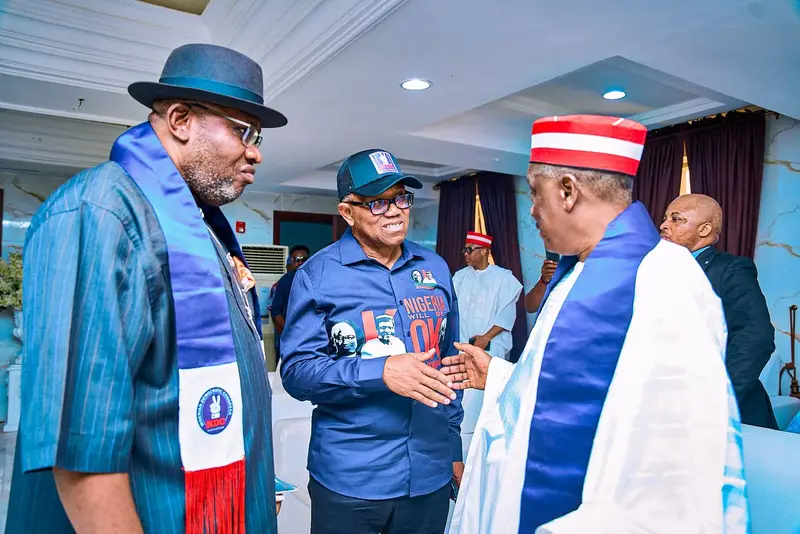
Chaired by party National Leader Senator Henry Seriake Dickson alongside presidential candidate Peter Obi as Co-Chairman, and supported by Kwankwaso and technical strategist Mallam Ibrahim Hussain Abdulkarim as Director-General, the NDC’s structure is generating intense discussion across Nigeria’s political landscape.
Here is an analysis of why analysts, strategists, and voters are describing the NDC’s setup as one of the most formidable campaign engines assembled in recent Nigerian history.
1. Bridging the Generational Divide: Structural Youth Integration
In previous election cycles, “youth inclusion” meant assigning young party members to peripheral roles—handing out flyers, managing social media channels, or organizing rally logistics – while older elites retained total strategic control.
The NDC’s 2027 campaign architecture breaks this pattern by embedding youth leaders into core operational positions:
Key Directorate Mandates: Young professionals hold direct decision-making power across operational directorates, including Youth Mobilization (led by Comrade Adamu Abbas Ahman and Idris Usman Audu), ICT, and strategic communications.
Policy and Digital Integration: Recognizing that Nigeria’s electorate is predominantly under 35, the campaign’s digital strategy and grassroots outreach are driven by young technocrats rather than legacy political appointees.
Direct Access to Leadership: Youth directors report directly to the Campaign Director General, Mallam Ibrahim Hussain Abdulkarim, ensuring rapid operational execution without bureaucratic bottlenecks.
2. Strategic Composition: The Alliance of Heavyweights
Beyond youth engagement, the council’s top hierarchy balances regional reach, political experience, and tactical expertise:
Role / Position / Appointee
Council Chairman:
Sen. Henry Seriake Dickson
Strategic Signifier – Niger Delta clout, legislative experience, and party leadership.
Co-Chairman:
Peter Obi
Strategic Signifier – Broad appeal among young voters, urban populations, and reform advocates.
Co-Vice Chairman:
Dr. Rabiu Musa Kwankwaso
Strategic Signifier – Grassroots Northern mobilization power through the Kwankwasiyya network.
Director-General:
Mallam Ibrahim Hussain Abdulkarim
Strategic Signifier – Youthful,Tech-savvy strategist linking digital execution with Northern political networks.
Advisory Council Chair:
Babachir Lawal
Strategic Signifier – Cross-regional alliances and institutional memory.
3. Why It Is Being Called the Best Campaign Structure Yet
A. Geopolitical Complementarity
The council combines Peter Obi’s southern and urban reformist appeal with Rabiu Kwankwaso’s deep-rooted northern grassroots network. Coupled with Seriake Dickson’s South-South presence, the NDC effectively covers Nigeria’s geopolitical zones without relying on hollow political alliances.
B. Competence Over Favoritism
The appointment of Ibrahim Hussain Abdulkarim as Director-General signals a shift toward data-driven campaigning. Rather than assigning operations to a career politician, the NDC opted for an ICT strategist capable of running a modern campaign operation.
C. Institutionalizing the Youth Vote
Rather than treating youth engagement as an afterthought, the NDC has integrated young strategists directly into its decision-making pipeline. This provides a structured path to channel organic youth enthusiasm into organized voter turnout across all 774 local government areas.
The Verdict
The NDC’s campaign council represents a distinct departure from traditional campaign setups. By combining veteran political leaders with young, tech-focused strategists, the party has constructed a functional hierarchy designed for modern campaigning.
Whether this structural model delivers electoral victory in 2027 will depend on execution. However, as a framework for inclusive, data-driven political organization, the NDC’s campaign council sets a clear benchmark for how contemporary campaigns in Nigeria are built.