
When historians look back at the defining geopolitical shifts of the early 21st century, the central narrative will not only be about great-power rivalries or economic realignments. It will also be about a profound demographic divergence: an aging legacy political elite pitted against an extraordinarily young, digitally native generation demanding basic dignity and systemic governance across the Global South.
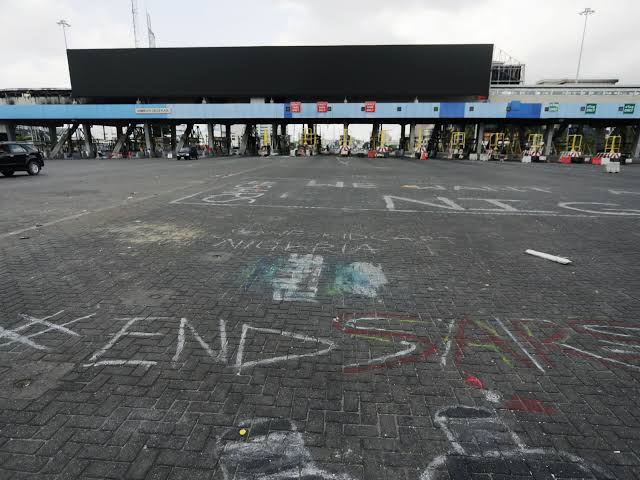
Nowhere was this fault line exposed with more tragic clarity than on the evening of October 20, 2020, at the Lekki Tollgate plaza in Lagos, Nigeria.
What began weeks earlier as #EndSARS – a rally to dismantle the notoriously violent Special Anti-Robbery Squad – quickly blossomed into a generational watershed. Nigeria is Africa’s largest economy and most populous nation, with over 60 percent of its population under the age of 25. Yet its median population age of 18 stands in stark contrast to a political class whose leadership averages well over 70.
In #EndSARS, this young population built a decentralized, tech-enabled movement: crowdfunding via digital currencies, coordinating real-time legal and medical defenses, and using open-source intelligence to hold power accountable. It was a preview of how democratic movements operate in a hyper-connected age.
A Calculated Darkness
As night fell over the tollgate plaza, thousands of young Nigerians sat cross-legged on the asphalt. They were armed with nothing more than green-and-white national flags, cellphones, and the strain of an anthem sung in unison.
What followed at 6:45 PM remains one of the most chilling demonstrations of state force against peaceful citizens in modern African history.
The sequence was deliberate. The public lights and CCTV cameras surrounding the plaza were powered down or removed – creating a literal and institutional blackout under which force could be deployed.
When uniformed security forces arrived, they opened fire. Live footage broadcast on Instagram Live captured the terror in real-time: tracer rounds piercing the dark, a chaotic rush for cover, and young protesters performing CPR on bloodied peers while still clutching drenched national flags.
The Anatomy of Denial and the Resiliency of Truth
In the immediate aftermath, the state’s response shifted from physical violence to informational warfare. What unfolded was a classic campaign of official obfuscation and gaslighting:
Phase 1: Complete Denial. Authorities initially insisted soldiers were never present, dismissing reports as “fake news.“
Phase 2: Partial Admission. As undeniable video evidence mounted, the narrative shifted – officials admitted army presence but claimed troops only fired blank rounds into the air.
Phase 3: Rhetorical Absurdity. Official channels ultimately labeled the incident a “phantom massacre,“ claiming no bodies or blood existed.
Yet truth proved resilient against state narrative control. Independent investigations by international news organizations, open-source intelligence networks, and forensic audio experts confirmed that live ammunition was indeed used against the crowd.
Ultimately, the Lagos State Judicial Panel of Inquiry – established by the government itself – submitted a sweeping report concluding that the events at Lekki amounted to a “massacre in context.“ The panel confirmed security forces shot unarmed protesters, killed multiple citizens, assaulted others, and subsequently attempted to cover up the crime scene.
The Broken Social Contract:
A democratic state derives its legitimacy from protecting its citizens. When military assets are turned against peaceful assembly, the social contract is severed, leaving behind a profound crisis of legitimacy.
The Path Forward: Why Lekki Matters to the Global Order
Six years after that fateful night, Lekki remains an unhealed wound on the national conscience. The tragedy at the tollgate was not merely a local failure of police reform; it is a global case study for developing democracies worldwide. As dynamic youth populations rise across Africa, Asia, and Latin America, governments face an existential choice:
1. Institutional Evolution: Reform security apparatuses, embrace transparent digital governance, and build inclusive democratic structures.
2. Entrenched Resistance: Rely on coercive force and narrative suppression to preserve the status quo, guaranteeing systemic instability over time.
For Nigeria and its international partners, genuine stability cannot be achieved through empty rhetoric or symbolic gestures. True reconciliation requires three non-negotiable actions:
Prosecution: Holding accountable every commander and officer who ordered or executed the shooting.
Justice and Compensation: Unedited implementation of the Judicial Panel’s findings, alongside state compensation for victims’ families and a permanent memorial at the Lekki site.
Structural Reform: Transitioning internal security forces from tools of regime protection to civilian-governed guardians of constitutional rights.
The youth who sat beneath the tollgate in October 2020 held up national flags as a shield, trusting in the promise of their republic. Until accountability is delivered for the blood spilled that night, the shadow of Lekki will continue to hang over Nigeria’s democratic pretensions. Silence is not peace; it is merely an intermission.