Firstpost Editorial Desk
For decades, the standard narrative surrounding state governance in Nigeria was one of quiet resignation. Subnational economies operated largely as administrative outposts – heavily reliant on monthly FAAC allocations from Abuja, weighed down by public-sector wage bills, and struggling to build sustainable revenue models.
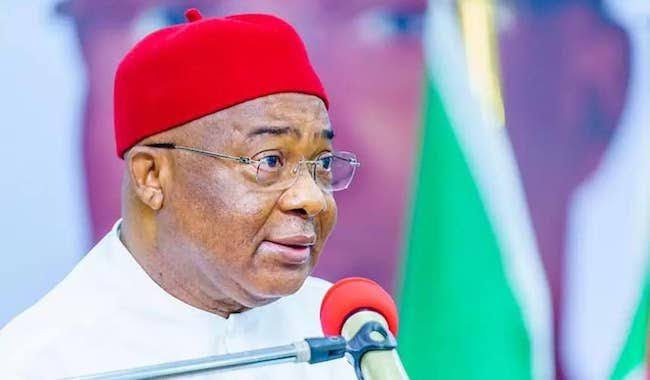
In Imo State, however, a deliberate structural shift is underway. Under Governor Hope Uzodimma, the government is attempting a rare transition: moving from a traditional consumer state toward a self-sustaining, private-sector-led economic engine.
The strategy – built around digital human capital, energy independence, and critical trade corridors offers an intriguing case study for regional development in West Africa.
The Human Capital Pivot: Code Over Handouts
Economic reforms typically begin with heavy machinery, but in Owerri, the focus has shifted heavily toward human capital. Rather than relying on short-term palliatives, the state launched the SkillUpImo project to address youth unemployment at its root.
The initiative focuses on high-demand technical competencies—software engineering, cybersecurity, data analytics, and artificial intelligence aiming to build a workforce capable of exporting services globally. With thousands of young residents passing through the program and the construction of the Imo Digital City, the state is laying the groundwork for a decentralized tech ecosystem in the South-East.
Unlocking Industrial Power: The Orashi Advantage
No industrial strategy survives without reliable energy. Businesses across Nigeria have long faced the burden of high captive power costs, driving up operational overhead and stifling manufacturing growth.
To tackle this, Uzodimma’s administration is capitalizing on recent federal power sector reforms that allow states to generate and distribute their own electricity. By leveraging Imo’s unexploited natural gas reserves through the Orashi Special Energy Free Trade Zone (OSEFTZ) and the Light Up Imo Project, the state is working to create dedicated industrial hubs powered by cheap, reliable gas-to-electricity infrastructure.
Infrastructure as an Economic Enabler
Physical infrastructure forms the third leg of this economic reset. Through the administration’s Reconstruction, Rehabilitation, and Recovery (3R) framework, more than 130 roads have been constructed or rehabilitated across all 27 Local Government Areas. Key arterial routes such as the Owerri-Orlu and Owerri-Okigwe dual carriageways have restored trade flows between rural agricultural producers and urban market centers.
Simultaneously, surrounding investments at the Sam Mbakwe International Cargo Airport aim to position Owerri as a central air-freight logistics hub for southeastern Nigeria, simplifying export logistics for local commercial enterprises and agricultural processors.
The Verdict
Transforming a subnational economy amidst global macroeconomic headwinds is an uphill task. Yet, by pairing digital skills development with structural energy reform and targeted infrastructure spending, Imo State is constructing a viable blueprint for fiscal independence.
If these reforms continue to mature, Imo may well demonstrate how state governments can move beyond surviving on monthly allocations to driving real, private-sector-led growth.