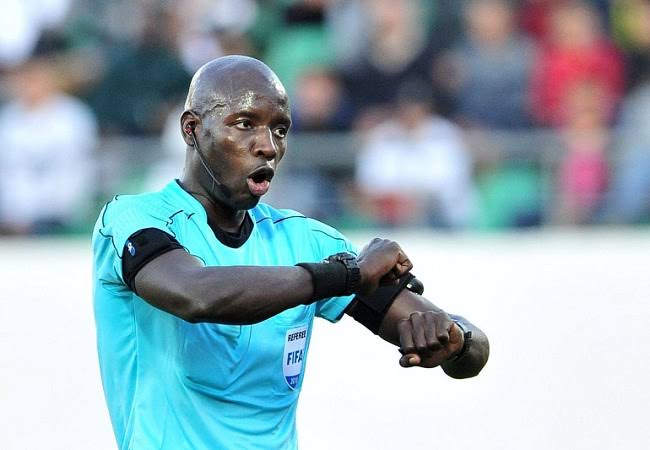
Nigeria arrived at the Africa Cup of Nations (AFCON) carrying the familiar, heavy mantle of a footballing superpower. It is a nation defined by its export of elite talent, a rich continental history, and an ambition that borders on birthright. Yet, as the tournament unfolded in the heat of the stadiums, a glaring void emerged: not a single Nigerian official was entrusted with a whistle.
For a country that has produced Champions League winners and World Cup icons, this absence is more than a statistical quirk. It is a quiet, devastating indictment of a collapsing system.
FROM AUTHORITY TO ABSENCE
The disappearance of the Nigerian referee did not happen in a vacuum. There was an era when names like Linus Mba and Larry Yemi commanded the pitch with an authority that matched the stature of the Super Eagles. They were staples of the continental game. Today, that lineage has hit a dead end. Nigerian officials are now ghosting the world stage – absent not just from AFCON, but from FIFA’s elite rosters and CAF’s high-stakes club finals.
This retreat is the result of a perfect storm: domestic decay, technological lag, and a reputation for administrative chaos that has finally caught up with the men in black.
A LEAQUE INTIMIDATION
The foundation of elite officiating is a stable domestic league, but the Nigeria Premier Football League (NPFL) has become a crucible of dysfunction. Referees in Nigeria’s top flight operate in an environment defined by delayed allowances, logistical nightmares, and, most critically, physical peril.
Social media is a grim archive of Nigerian referees being chased and assaulted by disgruntled fans, often with minimal intervention from security or meaningful sanctions from the league. When FIFA and CAF assessors look at Nigeria, they don’t just see individual officials; they see a toxic ecosystem. They are hesitant to trust a referee who, at home, is treated as a target rather than an arbiter.
THE DIGITAL GAP
In the modern game, the whistle is only as sharp as the technology behind it. Video Assistant Referee (VAR) competence is no longer an “extra” – it is the price of admission for international tournaments.
While North African and South African officials operate weekly in VAR-enabled environments, Nigerian referees remain largely sidelined by a lack of infrastructure. This technological divide has created a two-tier system in African refereeing. Through no fault of their own, Nigerian officials are arriving at the table with an analog skillset in a digital age.
THE POLITICS OF PERCEPTION
Beyond the pitch, Nigeria is suffering from “reputational collateral damage.” Years of governance disputes, court battles, and leadership crises within the Nigerian Football Federation (NFF) have eroded institutional trust.
When FIFA selects a referee, they are looking for neutrality and stability. In the eyes of global football’s governing bodies, Nigeria – despite its footballing pedigree – is currently viewed as a high-risk environment. In the quiet, highly political world of referee appointments, “noise” is the enemy of selection.
“noise” is the enemy of selection.
“The message to young Nigerian referees is chilling: excellence alone may no longer be enough to overcome the weight of the system.”
RECLAIMING THE GAME
Reversing this decline will require more than just better training; it requires a total professionalization of the craft. To find its whistle again, Nigeria must:
- Enforce Zero Tolerance: Implement draconian sanctions for any physical assault on match officials.
- Bridge the VAR Gap: Invest in consistent technological training and infrastructure to meet FIFA standards.
- Depoliticize the Path: Create transparent, performance-based pipelines for international nominations.
Until the NFF treats officiating with the same reverence it gives its star strikers, the continent’s most populous nation will remain a spectator in the governance of the game. Nigeria has always known how to shout from the stands; it’s time it learned how to command the field again.