Africa’s courts are crumbling under corruption and delays, leaving citizens fed up and turning to a new breed of advocates who deliver justice faster than any gavel. From Nigeria’s radio waves to Kenya’s protest-filled streets, these self-styled champions radio hosts, social media firebrands, and photojournalists are filling the void left by broken systems. They’re not waiting for judges to act. They’re naming, shaming, and mobilizing millions. Here’s how they’re rewriting the rules of accountability.
Ahmed Isah: Nigeria’s Radio Rebel
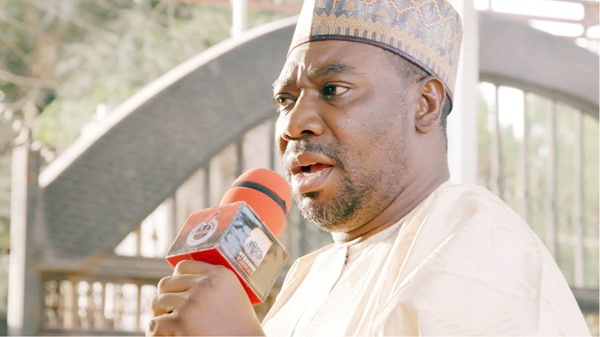
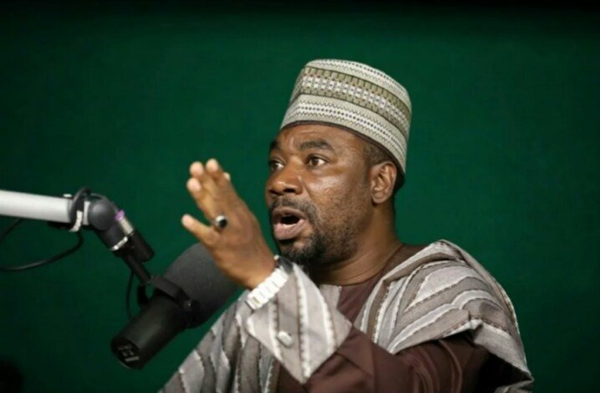
Ahmed Isah
In Abuja, Nigeria, dawn breaks with petitioners clutching folders of unpaid pensions, missing persons reports, and workplace abuses, all queuing outside the “Brekete Family” radio studio. They’re not here for bureaucrats they want Ahmed Isah, the “Ordinary President,” whose fiery six-day-a-week show on Human Rights Radio has become a lifeline for those the courts ignore. “The laws exist, but enforcement is a myth,” Isah told Reuters. “Ordinary Nigerians are left defenseless.” His solution? Air their grievances live, shaming negligent officials sometimes even broadcasting their phone numbers to unleash a flood of listener calls.
Since 2009, Isah’s Brekete Family has resolved over 200 stalled cases, often faster than Nigeria’s clogged courts. By mediating disputes on air and pressuring officials directly, he’s given the powerless a megaphone. One listener told ToriPost, “Brekete shows us we can demand change, not just beg for it.” But Isah’s crusade isn’t without cost. A 2021 BBC Africa documentary exposed him slapping a woman accused of harming her niece, sparking outrage and a temporary license suspension by Nigeria’s broadcast regulator. Isah apologized, insisting his mission is justice, not violence. “We must hold the corrupt accountable,” he told BBC News.
For now, his mic remains live, a defiant signal to a system that fails the poor.
VeryDarkMan: Nigeria’s Digital Maverick
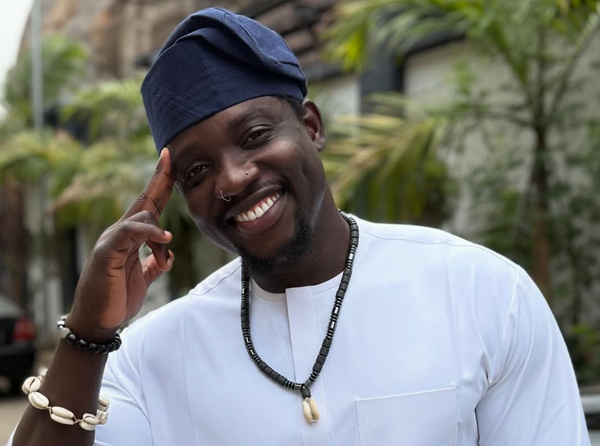
Martins Vincent Otse aka VeryDarkMan (VDM)
While Isah rules the airwaves, Martins Vincent Otse aka VeryDarkMan (VDM) dominates Nigeria’s digital streets. Since 2022, this shirtless, ranting Instagram and TikTok star has exposed fraud, extortion, and hypocrisy, from market touts to celebrity scammers.
His raw videos have amassed a “cult-like following” of millions, young Nigerians who see him as their voice against a rotten establishment. “When VDM speaks, people react sometimes in millions,” one analyst noted. His clips spark petitions, fuel protests, and force sluggish institutions to move.
Calling himself a one-man fourth estate, VDM shrugs off threats. When the National Association of Nigerian Students targeted him for meddling in campus politics, he fired back on Instagram: “The Ratel don’t run. I’m not Ahmed Isah. I’ll be waiting.” But his boldness comes at a price. In 2024, he faced cyberstalking and defamation charges after exposing an alleged fraudster. In May 2025, he was briefly detained again for slamming a bank’s fees. Critics call him sensationalist, but VDM remains unfazed, vowing to keep “shining a light” on injustice from Abuja’s streets to social media screens.
Boniface Mwangi: Kenya’s Protest Lens
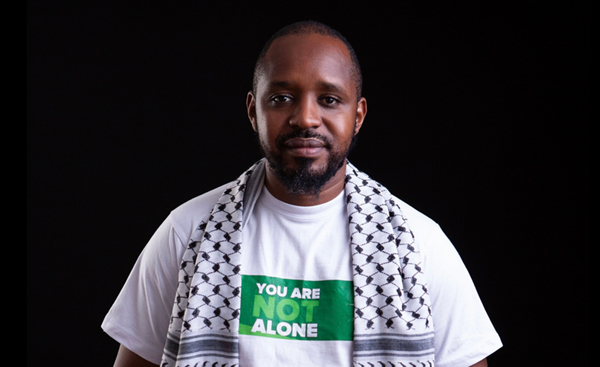
Boniface Mwangi
In Nairobi, Boniface Mwangi wields a camera and a megaphone to expose Kenya’s broken promises. The award-winning photojournalist first made waves documenting the 2007 post-election violence, risking his life with a hidden camera. Now, through his Pawa254 activism hub, Mwangi stages bold stunts colorful sit-ins and marches to shame corrupt officials and rally citizens. “If I can do it, you can too,” he says, urging Kenyans to demand accountability.
Mwangi’s profile soared during 2017 anti-corruption protests, and he ran for Parliament in 2022 as an anti-establishment voice. But his activism draws fire. Earlier this year, he was detained in Tanzania while supporting an opposition leader. At a press conference post-release, Mwangi and a Ugandan colleague accused Tanzanian agents of blindfolding, beating, and sexually assaulting them.
“They take you through torture,” he told The Guardian, showing hospital photos of his bruised body. Back in Kenya, a limping Mwangi vowed to sue Tanzania’s government. “We won’t let them get away,” he said. His lens keeps rolling, documenting police brutality and alleged election fraud, filling the gap where Kenya’s courts fall silent.
Hopewell Chin’ono: Zimbabwe’s Exiled Truth-Teller
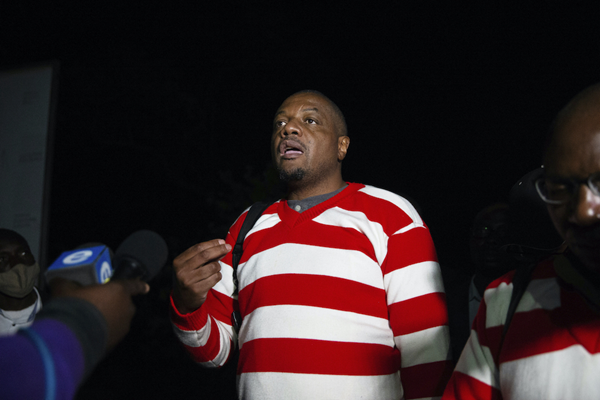
Hopewell Chin’ono
In Zimbabwe, Hopewell Chin’ono fights a similar battle from a small South African workspace. The veteran journalist exposed corruption under Mugabe and Mnangagwa, most notably a 2020 COVID-19 funds scandal. His reward? Repeated arrests, home raids, and weeks in prison. “Arrest is a weapon to silence critics,” he told a 2022 Geneva summit. Yet Chin’ono refuses to quit. On YouTube and Twitter, he broadcasts hard truths like Zimbabwe’s 2,500 annual maternal deaths due to the ruling ZANU-PF’s failure to build maternity theaters in 42 years.
Even in exile, Chin’ono’s investigations keep Zimbabwe’s public record alive where courts and lawmakers fail. His defiance has inspired a generation, proving that a single voice can pierce the silence of a complicit system.
Kemi Séba: Pan-African Firestarter
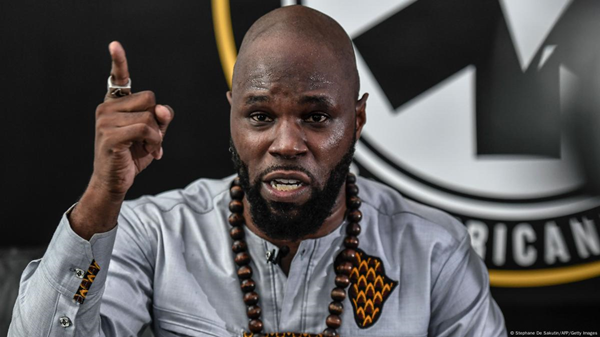
Kemi Séba
In Francophone Africa, Kemi Séba, a Senegalese-born Beninese activist, takes aim at colonial legacies like the CFA franc, which he says drains African wealth. In 2017, he burned a CFA note in Dakar, landing in jail before an acquittal. Senegal, Togo, and Ivory Coast have since expelled him, but Séba keeps fighting. “There’s no healthy economy without cleaning up our elites,” he told Africanews. From Dakar to Paris, he rallies crowds, lobbies unions, and names complicit bankers, linking grass-roots anger to global policy. Every deportation only amplifies his voice.
The Fight Goes On
From Nigeria’s airwaves to Zimbabwe’s exiled broadcasts, Africa’s activists are rewriting justice on their own terms. They face arrests, violence, and smear campaigns, but their impact is undeniable: millions are joining them, using radio, social media, and streets to demand accountability. As one analyst put it, VeryDarkMan and his peers have “redefined activism” for a generation done with empty promises. Courts may be deaf, but the airwaves roar, and the asphalt pulses with protest. For Africa’s poor, this is justice raw, loud, and unstoppable.