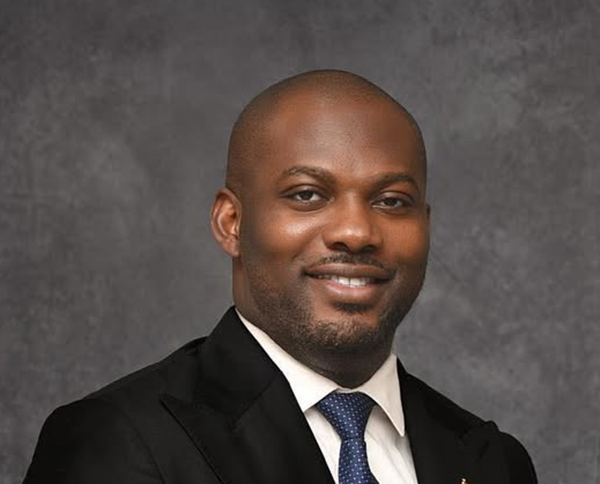
In a nation where the promise of education often clashes with the reality of crumbling classrooms and outdated curricula, Alex Onyia stands as a relentless advocate for change.
As the CEO of Educare, a digital platform transforming how schools operate across Africa and beyond, Onyia has emerged as a vocal force in the education sector, blending tech-savvy innovation with grassroots activism. Onyia’s efforts are rooted in a deep frustration with systemic failures, aiming not just to patch holes but to rebuild the foundation of learning for millions of young Nigerians.
At a time when the country’s youth bulge could be its greatest asset or its undoing, Onyia’s work offers a blueprint for turning potential into progress.
The Journey: From Frustration to Innovation
Onyia’s journey into education reform began with a personal reckoning. Growing up in Nigeria, he witnessed firsthand the disparities that plague the system: elite private schools thriving while public institutions languish in neglect.
Today, through Educare, he has on-boarded over 80% of Nigeria’s top private schools, extending the platform’s reach to countries in Europe, the Middle East, and the UK. But Onyia isn’t content with serving the privileged. His vision is democratic: leveraging technology to bridge gaps in access and quality.
In a 2024 interview, he explained how Educare uses cutting-edge tools to streamline learning processes, from attendance tracking to personalized lesson plans, arguing that “technology can rapidly close the education gap” in even the most remote communities.
Transforming Outcomes: Village-Level Miracles
One of his most striking achievements came in his own village in Enugu State. Last year, over 75% of local students failed the Joint Admissions and Matriculation Board (JAMB) exam, a critical gateway to higher education.
Undeterred, Onyia mobilized resources, providing textbooks, online courses, and mentorship, and flipped the script. This year, every participant passed, a 100% success rate that he attributes to intentional, tech-driven interventions.
“If we are intentional, we can totally transform Nigeria’s education in 12 months,“ he declared on national television, emphasizing that such turnarounds aren’t “rocket science“ but require commitment and innovation.
This village-level miracle has inspired broader initiatives, including shipments of high-quality textbooks, such as A1 English and Abbot Physics, to states like Enugu, Niger, Delta, and Ebonyi, prioritizing education as a means of “freedom“ over temporary palliatives.
A Bold Reform Agenda
Onyia’s reform agenda extends far beyond local fixes. He has called for sweeping changes to Nigeria’s education system, including:
Enforcing stricter teacher qualifications that require at least a master’s degree.
Boosting salaries to N400,000 (about $250) to attract top talent.
Proposing a ban on politicians’ children studying abroad until public schools meet basic standards forcing accountability on leaders who abandoned the system.
He critiques the current setup for producing “exam champions, not problem solvers,“ advocating for a curriculum overhaul that emphasizes critical thinking, STEM skills, and real-world applications.
Technology at the Core
Technology is central to Onyia’s strategy. He has partnered with institutions in Switzerland and Eindhoven to design a world-class STEM program tailored for Nigerian students, starting from primary school.
This includes:
Introducing block programming in early grades to boost cognitive abilities and IQ.
Preparing children to graduate as “programming geniuses.“
Advocating universal high-speed internet and solar power in rural areas.
He points to Starlink’s installation in his village, which has already increased learning and productivity. “Over 50,000 Nigerians have learned programming, UI/UX, and design online skills not taught in universities but thriving through tech access,“ he explains.
Confronting Systemic Challenges
Yet, Onyia’s efforts aren’t without obstacles. Nigeria’s education woes rooted in corruption, outdated curricula (unchanged for 15 years), and lax policies run deep.
He has been especially vocal about the Southeast, where high illiteracy rates persist despite potential. His proposal: a regional curriculum that blends apprenticeship with formal schooling, certifying apprentices as graduates to create more millionaires and practical problem-solvers.
His accountability campaigns, such as pressuring exam bodies like WAEC to revise results, have earned him praise as someone doing the “Lord’s work” in holding institutions responsible.
The Critics and the Crusade
Critics argue Onyia’s ideas are overly ambitious in a country facing economic hardship and political inertia. But his track record suggests otherwise.
From transforming outcomes in his village to influencing national discourse such as podcasts questioning UTME’s relevance Onyia represents a new kind of reformer.
As Nigeria faces crises linked to broken education, including unemployment and insecurity, he warns: “Every child out of school is a future doctor or engineer lost.“
A Call for Mindset Change
Ultimately, Onyia’s crusade is about more than reforms; it’s a call for a fundamental mindset shift.
“We need to eradicate these errors in our society so Nigeria becomes better for generations,“ he says, trusting in grace and wisdom to drive change.
As global partners and local stakeholders increasingly align with his vision, Onyia’s efforts could indeed spark the quiet revolution Nigeria desperately needs one classroom at a time.