Home » African Queens of the Pitch: Redefining Women’s Football on the Global Stage

African Queens of the Pitch: Redefining Women’s Football on the Global Stage

by ToriPost
0 comments
From dusty pitches in local neighborhoods to the roaring stadiums of global tournaments, Africa’s women footballers have transformed the sport’s narrative. Icons like Asisat Oshoala and Perpetua Nkwocha have not only amassed trophies and shattered records but also defied stereotypes, inspiring a new generation. Their stories of resilience and triumph highlight Africa’s rising prominence in women’s football. Here, we profile five trailblazers whose careers, struggles, and legacies have reshaped the game across the continent and beyond.
Asisat Oshoala: The Global Superstar
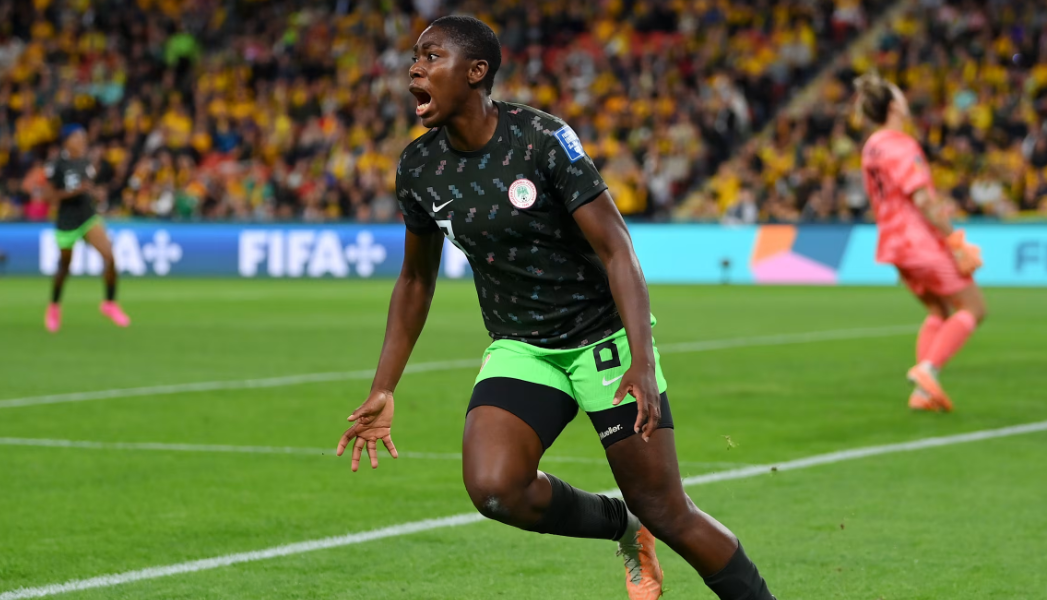
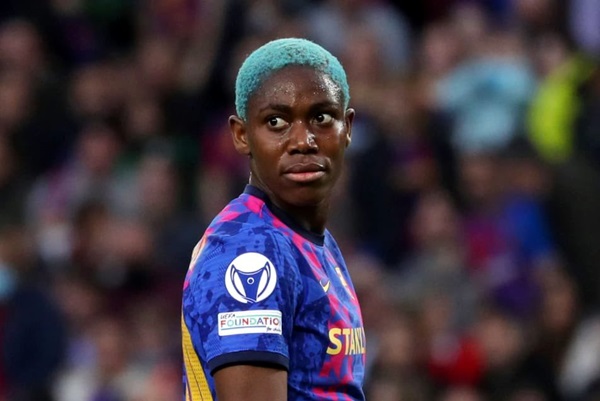
Asisat Oshoala, a six-time African Women’s Footballer of the Year, is a beacon of African excellence. Born in Lagos, Nigeria, she exploded onto the global stage at the 2014 FIFA U-20 Women’s World Cup, clinching the Golden Boot with seven goals and the tournament’s best player award. Her career trajectory from Nigeria to Europe’s elite clubs reads like a world tour. At FC Barcelona, she became the first African woman to win three UEFA Women’s Champions League titles, including a goal in the 2019 final. In 2022, she made history as the first African woman nominated for the Ballon d’Or Féminin.
Oshoala’s accolades are staggering: six CAF Women’s Player of the Year awards (2014, 2016, 2017, 2019, 2022, 2023), surpassing any player in CAF history. Beyond her on-field dominance winning the FA Cup with Arsenal, two Chinese league titles with Dalian, and Spain’s Pichichi award with Barcelona she’s a cultural force. After her 2019 World Cup heroics, her Instagram following soared past one million. In 2024, she joined Bay FC in the U.S., further amplifying her global reach.

Off the pitch, Oshoala’s foundation, launched in 2019, empowers young girls through football in Africa. Nicknamed Àgba Baller” (Legendary Footballer) in Nigeria, she’s a role model proving African women can compete at the pinnacle. “They said African players couldn’t play in Europe, she once recalled, but her journey from Lagos to Liverpool and Barcelona has silenced doubters, elevating African women’s football to new heights.Perpetua Nkwocha: Nigeria’s Unrivaled Queen
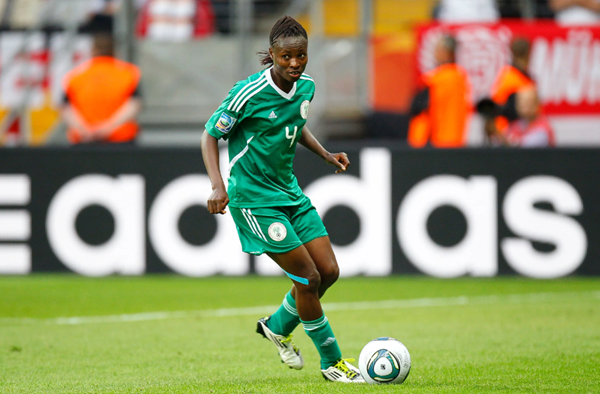
Perpetua Nkwocha, born in 1976, is the cornerstone of Nigeria’s Super Falcons, earning the title Queen of African Football. Over a storied career, she led Nigeria to five African Women’s Cup of Nations (AWCON) titles (2002, 2004, 2006, 2010, 2014), a record unmatched by any player, male or female. With approximately 99 caps and 80 goals, her scoring prowess was legendary most notably, a four-goal haul in the 2004 AWCON final against Cameroon. She claimed four CAF Women’s Player of the Year awards (2004, 2005, 2010, 2011) and, in 2004, became the only African ever named to FIFA’s World XI.

Nkwocha’s leadership defined an era. As captain, she inspired Nigeria’s dominance and later transitioned to coaching in Sweden and with the Falcons, mentoring the next generation. Her journey from Imo State to global stardom was fueled by passion she once dreamed of becoming a nun or lawyer but chose football. My love for football was too much, she said. Nkwocha’s legacy endures as a symbol of how one woman’s determination can transform a sport.

Cynthia Uwak: The Scandinavian Trailblazer

Cynthia Uwak’s career is a testament to African talent thriving abroad. Born in 1986 in Akwa Ibom, Nigeria, she honed her skills playing against boys on the streets before her mother’s support launched her professional journey. Uwak became the first Nigerian woman to dominate overseas, winning league titles in Scandinavia and France. At Olympique Lyonnais in 2009, she helped secure a championship, and in Finland, she claimed three Naisten Liiga titles (2011–2013), even topping the scoring charts.

Internationally, Uwak shone in Nigeria’s 2004 and 2006 AWCON victories and competed in the 2007 World Cup and 2008 Olympics. Her back-to-back CAF Women’s Player of the Year awards (2006, 2007) underscored her impact. Despite a 2010 knee injury that sidelined her from a World Cup, Uwak’s resilience and advocacy against stereotypes about female footballers cemented her legacy. She paved the way for future stars like Oshoala, proving African women could excel in top leagues.

Gaëlle Enganamouit: Cameroon’s World Cup Sensation
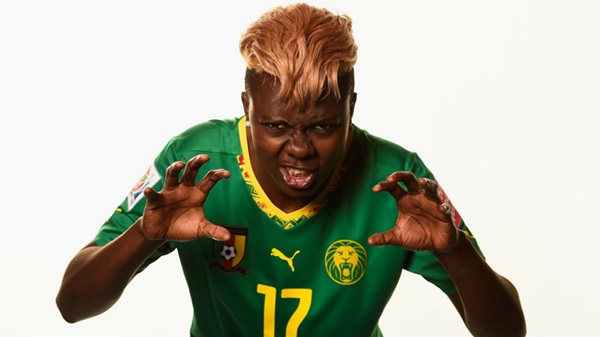

Gaëlle Enganamouit, born in Yaoundé, Cameroon, became a global name at the 2015 FIFA Women’s World Cup. Her electrifying hat-trick against Ecuador in Cameroon’s 6–0 debut victory marked the first time an African team achieved such a feat at the tournament. At 23, she propelled the Indomitable Lionesses to the Round of 16 and earned the 2015 African Women’s Footballer of the Year award. Her club career took her to Sweden’s Rosengård, alongside legend Marta, and to Turkey, showcasing Cameroonian talent.

Enganamouit’s impact extends beyond the pitch. Her Rails Football Academy in Yaoundé provides young girls with training facilities she lacked growing up. It’s important that women have their own space, she said. Her journey from local pitches to World Cup stardom has inspired countless African girls, proving that Cameroon and Africa belongs on the global stage.

Portia Modise: South Africa’s Record-Breaking Pioneer
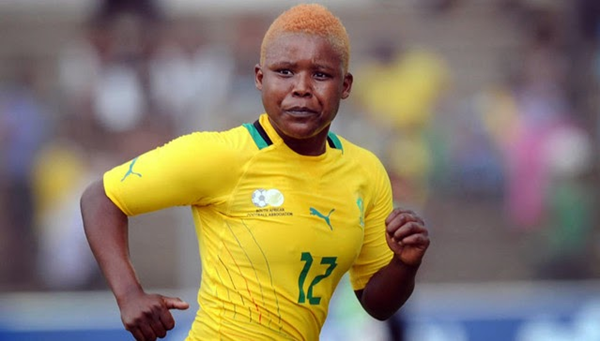
Portia Modise, South Africa’s Uzalo Striker, redefined women’s football with her audacity and skill. From 2000 to 2015, she became the first African, male or female, to score 100 international goals, finishing with 101 in 124 appearances for Banyana Banyana. Her bicycle kick at the 2012 London Olympics remains iconic. Modise’s club career spanned South Africa’s Palace Super Falcons and Denmark’s Fortuna Hjorring, and in 2005, she earned a FIFA World Player of the Year nomination.
As one of football’s first openly gay players, Modise fought for equality and recognition. I made people recognize that there is women’s football, she said, reflecting on her role in elevating the sport in South Africa. Her advocacy for women’s rights and LGBTQ inclusion, paired with her record-breaking feats, made her a transformative figure. Today, stars like Thembi Kgatlana carry her torch.
A Lasting Legacy
These women, Nkwocha, Uwak, Enganamouit, and Modise have rewritten football’s narrative. Their triumphs, from AWCON titles to World Cup heroics, showcase Africa’s prowess. Their personal battles against cultural barriers, limited resources, and prejudice highlight their resilience. Off the pitch, they’ve built academies, challenged norms, and inspired millions. As CAF noted in 2025, African women footballers have redefined the role of women in football, paving the way for greater equality. With rising stars like Zambia’s Racheal Kundananji and Morocco’s Nouhaila Benzina continuing their legacy, Africa’s women are ensuring the game’s future is as bold and triumphant as their past.

You may also like

Leave a Comment

Group 2

Welcome to ToriPost — Global Stories Reimagined through Africa’s lens: Deep analysis. Unflinching perspectives. We cut through noise, bridge continents, and spotlight tomorrow’s solutions. Crafted for thinkers who demand more.

Are you sure want to unlock this post?
Unlock left : 0
Are you sure want to cancel subscription?
Show/Hide Player
-
00:00
00:00
Update Required Flash plugin
-
00:00
00:00