
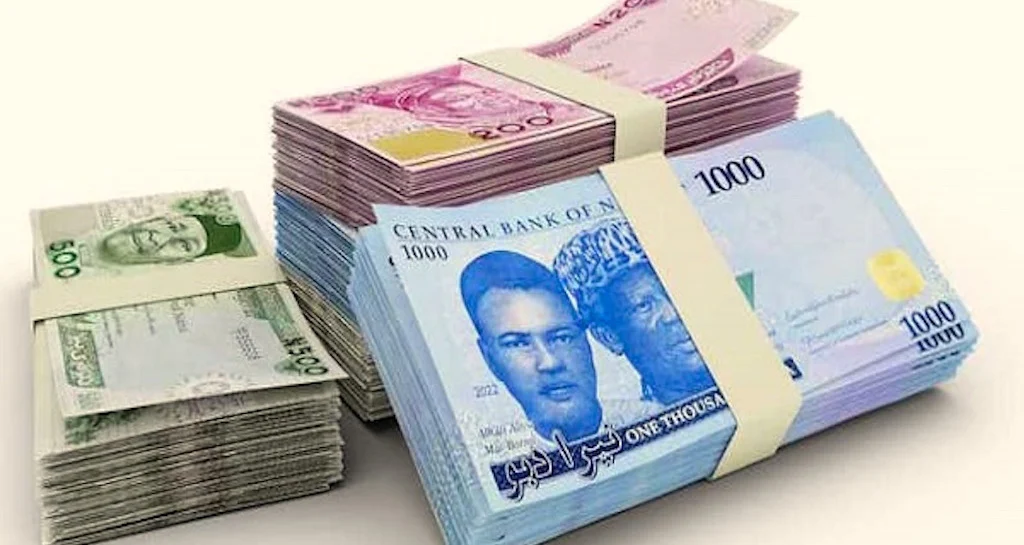
Public argument over governance performance in Abia State has centred on comparisons of revenue inflows and infrastructure delivery between administrations. Yet such discussions frequently founder on a basic analytical error: the failure to adjust for changes in the real purchasing power of money over time.
Senator Orji Uzor Kalu, who governed Abia from 1999 to 2007, has suggested that recent monthly federal allocations under Governor Alex Otti approximate the total resources available across his own eight-year tenure. This claim relies on unadjusted naira figures. It overlooks the profound depreciation of Nigeria’s currency and the cumulative impact of inflation on the cost of delivering public goods.
n the earlier period, the naira averaged roughly ₦120–₦130 to the dollar. Total inflows to Abia – federal allocations plus internally generated revenue – equated to an estimated $2.5bn in contemporaneous US dollar terms. This represented substantial command over imported inputs essential for infrastructure: heavy machinery, bitumen, engineering services and financing, all priced in a relatively stable exchange environment.
The same nominal naira equivalent of that era – around ₦300bn – today converts at prevailing rates (approximately ₦1,417 per dollar as of mid-January 2026) to roughly $212m. Nearly nine-tenths of its external value has been lost. When inflation since the mid-2000s, which has cumulatively exceeded 1,000 per cent, is incorporated, the resources required to achieve equivalent physical outcomes multiply further.
A simple illustration suffices. One billion naira in 2005 commanded about $7.7m internationally; today it buys roughly $700,000. Nominal increases in budgetary headlines conceal a severe contraction in real economic capacity.
Infrastructure is especially sensitive to this dynamic. Construction inputs – equipment, materials, skilled services – track foreign exchange movements closely, even when components are sourced domestically. Larger naira allocations in the current environment do not denote greater abundance; they reflect the currency’s eroded command over reality.
Credible cross-period comparison demands standardisation: express both eras’ resources in constant dollars at the time, or in inflation-adjusted naira linked to a basket of construction costs. Nominal naira-to-naira juxtapositions mislead.
Once fiscal capacity is properly contextualised, attention shifts to outcomes. Claims that contemporary road projects merely rehabilitate those constructed two decades ago elide an important distinction. A road corridor is not synonymous with a functional road. The latter comprises engineered layers, drainage, surfacing and shoulders, all subject to design-life depreciation and requiring regular maintenance to remain serviceable.
Projects completed to standard between 1999 and 2007, if maintained, would typically need resurfacing or partial reconstruction by now – not full replacement. Extended neglect in subsequent years would account for accelerated deterioration. In such cases, original credit does not persist indefinitely; functionality does not survive abandonment. Assertions of enduring legacy require verifiable records: contract awards, completion certificates, payment documentation and maintenance histories. Without this chain, claims rest on assertion rather than evidence.
By contrast, in Governor Otti’s first eleven months in office (June 2023 to April 2024), Abia received total inflows of approximately ₦347.5bn from federal allocations, own revenue and limited borrowing. Converted at current exchange rates, this equates to roughly $245m in purchasing power – less than one-tenth the real capacity available annually during the Kalu years.
This disparity does not indict present stewardship. It underscores Nigeria’s wider macroeconomic trajectory: persistent currency weakness, inflationary pressures and constrained fiscal space. Governor Otti operates with diminished real resources in a far costlier environment to restore or replace assets whose utility has largely been lost.
The pertinent question is therefore comparative stewardship of capacity. Of the $2.5bn (in strong-currency terms) over eight years two decades ago, what share yielded durable public capital whose benefits persist? Of today’s more constrained $245m or so in devalued terms, what proportion is translating into resilient infrastructure?
Nigeria’s subnational governments, like its national economy, must confront the consequences of currency depreciation and fiscal erosion. The debate in Abia is local in detail but illustrative of a national challenge. Sound administration is measured not by nominal inflows but by what is delivered – and what endures – when money’s true value is honestly reckoned.
With respect for the pursuit of accountable governance in Nigeria’s states.